Cloud Mining vs Mining Games: How to Evaluate the Claims
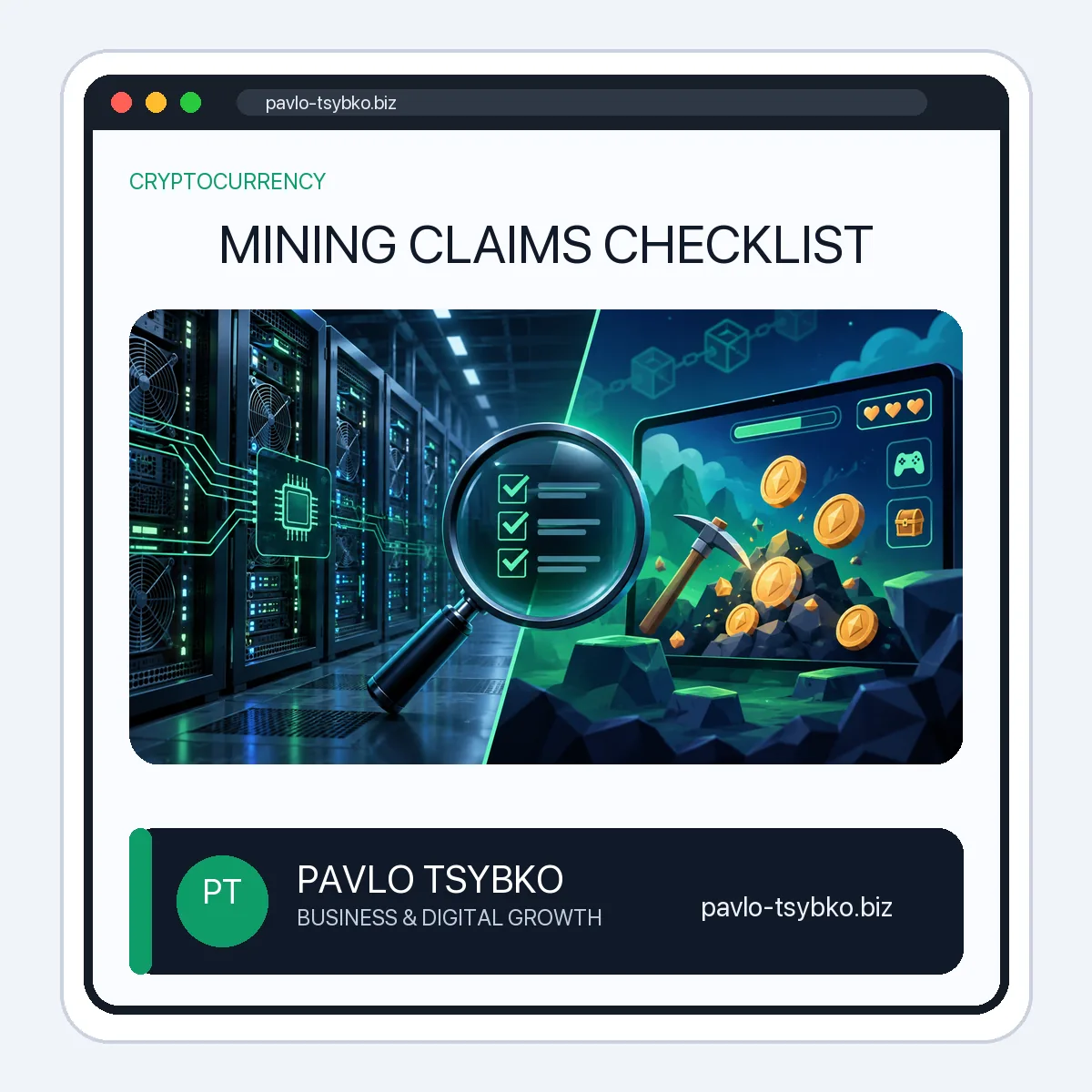
A mining dashboard is not proof of mining income. A hosted mining contract and a mining-themed game can both show coins, a hashrate or a growing balance. But they represent different activities. Before paying, inviting others or sharing wallet information, find out what the numbers actually mean and whether any withdrawal claim can be independently checked.
Cloud mining and mining games are different
In a genuine cloud-mining arrangement, a company claims to operate physical computing equipment and sells access to some of its output under a contract. The buyer does not control the machines. Even if the equipment exists, electricity, maintenance, network difficulty, coin prices, fees and contract terms can change the result. A contract is not a guaranteed income stream.
A mining game simulates this process. Its pickaxes, servers and coins may be gameplay points rather than cryptocurrency recorded on a public blockchain. A game can offer rewards, but a rising on-screen balance alone does not establish that the operator holds funds or will allow a withdrawal. Some products mix a game interface with a purported investment or referral program; assess each claim separately.
What would verify a mining claim?
- Operator: Is there an identifiable legal entity, jurisdiction, management team and support route? Can you verify them independently of the product’s own website?
- Equipment and output: What exactly is being rented? Are facility and hashrate claims supported by credible third-party evidence, not just stock photos or a dashboard?
- Contract economics: Are the term, upfront price, electricity and maintenance charges, payout threshold, and conditions for ending the contract written clearly? Model a downside scenario, not only the advertised return.
- Withdrawal: Is the payout an actual blockchain transaction to a wallet you control, or merely a number inside an account? Check transaction details yourself on the relevant network. Screenshots and testimonials are not substitutes.
- Custody and data: Who controls the coins before payout? Never send a seed phrase or private key to claim a reward.
Even these checks reduce uncertainty rather than prove safety. If the operator cannot answer basic questions, the responsible choice may be not to participate.
Red flags in a mining game or contract
Be especially cautious of guaranteed daily profit, pressure to act quickly, a demand for an extra deposit or “tax” to release an apparent balance, and rewards that depend mainly on recruiting friends. The US Federal Trade Commission’s cryptocurrency-scam guidance warns that scammers can show fake account growth and then prevent withdrawals. The SEC and CFTC investor alert also flags fraudulent digital-asset sites claiming mining-farm returns.
An earlier version of this article promoted a specific mining-themed game and described withdrawals and rewards as if they were established facts. We could not independently verify those payout claims. This revised guide does not recommend that product or include its referral link.
A five-minute decision checklist
- Write down the exact claim: mining output, in-game points, withdrawable cryptocurrency, or a promised return.
- Locate the company, contract and fee schedule outside promotional posts.
- Ask for independently checkable proof of mining and completed payouts; do not treat a screenshot as proof.
- Calculate what happens if prices fall, fees rise or withdrawals stop.
- If the evidence is missing, avoid payment and recruitment. Learning how mining works does not require buying a contract.
Bottom line: distinguish a simulated balance from an asset you control, and treat every earnings claim as unverified until you can check it. This article is educational, not financial or investment advice.