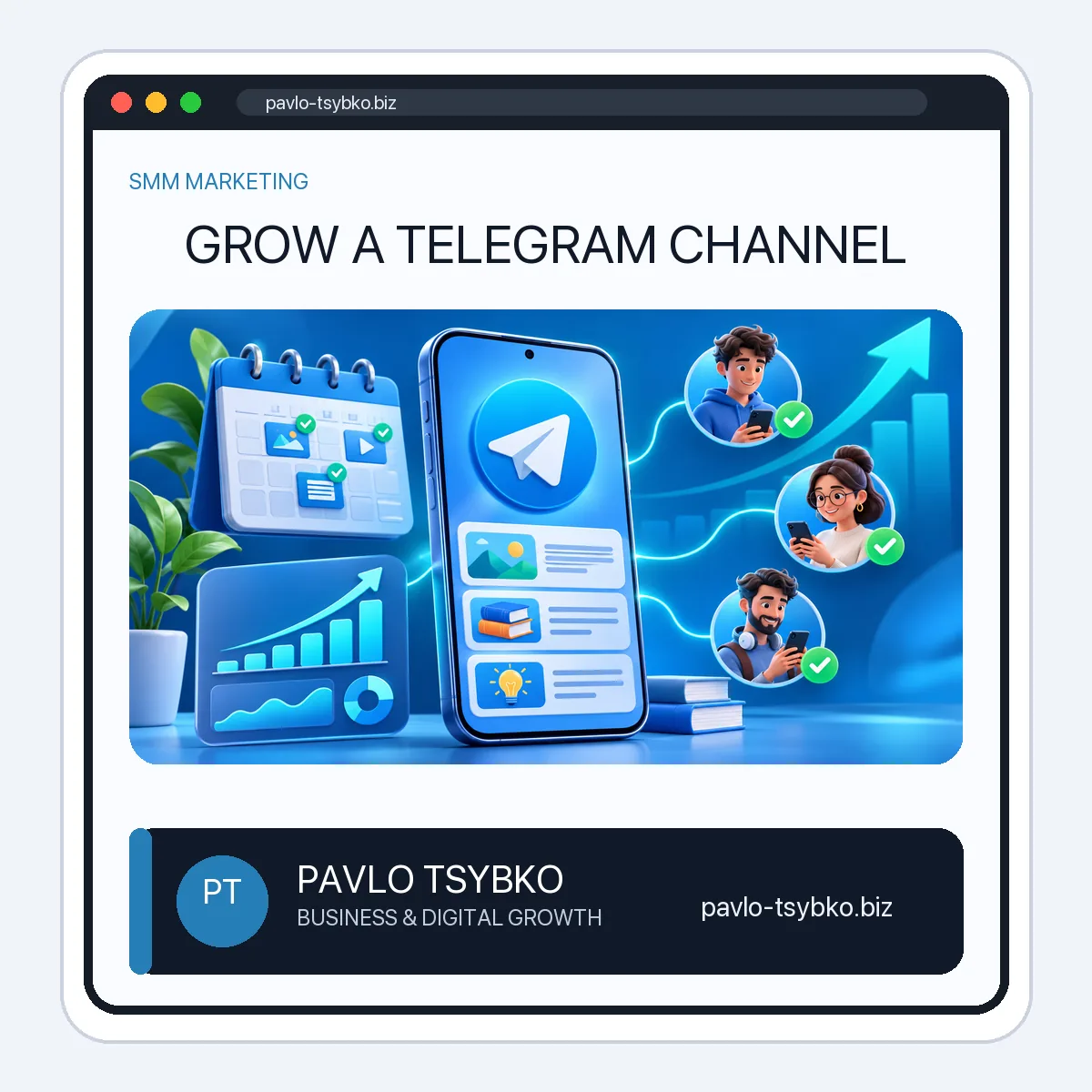
How to Grow a Telegram Channel Without Spam
Updated November 2026. This guide is for businesses and creators building an opt-in Telegram channel, not for buying subscribers or inviting strangers without consent.
A Telegram channel is useful when people want updates from you: product launches, practical lessons, event reminders, or a focused editorial digest. It is not a shortcut to an audience. Before promoting a channel, decide what a subscriber will receive and why they should keep reading.
1. Define the channel’s job
Write one sentence that names the audience, the problem, and the promise. For example: “A weekly briefing for small business owners on practical digital marketing experiments.” Keep that promise narrower than your overall business. A clear topic makes it easier to decide what to publish and what to decline.
Choose one primary outcome: useful inquiries, repeat visits, event registrations, or customer education. Subscriber count can be a supporting metric, but it does not tell you whether the channel helps your business.
2. Set up a trustworthy profile
- Use a recognizable name, clear avatar, and short description stating who the channel is for.
- Add a stable public link and a working contact route. Explain how people can ask a question or request a service.
- Pin a welcome post with the topic, posting rhythm, useful starting links, and any commercial relationship readers should know about.
- Before inviting anyone, publish several useful posts so a new visitor can judge the value.
If the channel is part of a business, keep ownership and administrator access under your control. Give collaborators only the access they need and review it when roles change.
3. Build a repeatable content plan
Start with three or four recurring formats rather than trying to post every day. A service business might rotate a short how-to, an answer to a common client question, a transparent lesson from a project, and a curated resource. Give each post one idea, a clear opening, and a useful next action. Link to a fuller article when the topic needs depth.
Draft a four-week calendar, then adjust it based on questions people actually ask. Avoid turning every update into a sales pitch. If a case includes client data or results, publish it only with permission and enough context to explain what the evidence does—and does not—show.
4. Grow through voluntary discovery
Invite people who already have a reason to hear from you: add the channel link to relevant website pages, your email signature, social profiles, and onboarding messages where appropriate. Tell them what they will get, not just “subscribe.” Share an individual post when it directly answers a question in a community whose rules allow it.
Partnerships with complementary creators can work when both audiences benefit. Agree on the topic, disclosure, and measurement before publishing. For paid reach, evaluate Telegram’s official advertising platform and clearly label paid placements. Start with a small test, a useful destination post, and a way to distinguish meaningful subscribers from empty reach.
Do not scrape members from other groups, send unsolicited invitations, operate multiple accounts to bypass limits, or buy “live subscribers.” Those tactics damage trust and can trigger restrictions. Telegram’s spam FAQ explains why unwanted messages and invitations are reported.
5. Measure quality, not just growth
Review a simple weekly dashboard: new subscribers, post views over a consistent time window, replies or reactions where enabled, website visits with campaign-tagged links, and qualified inquiries. Compare posts by topic and format. A smaller audience that reads and asks relevant questions may be more valuable than a large audience acquired by an opaque promotion service.
Keep a short experiment log: what you changed, what you expected, what happened, and what you will do next. Avoid treating one successful post as proof of a repeatable strategy.
A practical four-week launch
- Week 1: choose the audience and promise, secure the channel, write the pinned introduction, and publish three foundational posts.
- Week 2: add the link to relevant owned channels and invite existing contacts only where they have opted in or would reasonably expect the invitation.
- Week 3: test one partner collaboration or a small official ad campaign, with a clear message and a relevant landing post.
- Week 4: review engagement and inquiries, keep the best format, and revise the next month’s calendar.
For a group or discussion community rather than a broadcast channel, read the separate Telegram community growth guide. If your goal is paid placement specifically, see the Telegram Ads guide and verify current platform options before budgeting.
Need a channel plan for your business?
Start by defining your audience, content promise, and the action a useful subscriber should take. Email me those three points to discuss a practical channel plan. No fixed subscriber or sales outcome can be guaranteed.