How to Evaluate an NFT Before Buying
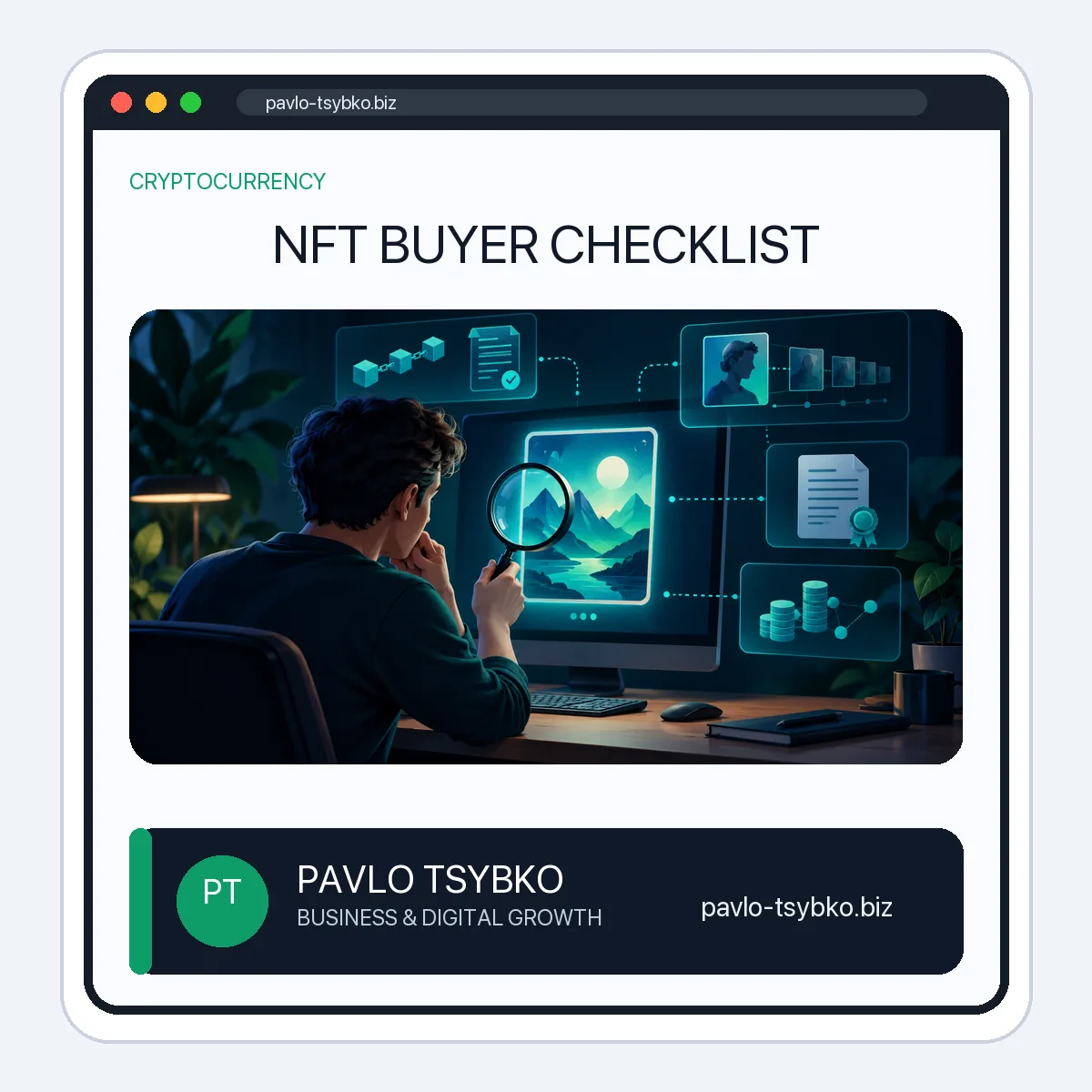
An NFT listing is a starting point for research, not a reason to buy. A token can be tied to digital art, access or another project claim, but its price does not establish authenticity, useful rights or a future buyer. If you are considering a purchase, use a simple evidence checklist and be willing to walk away when essential details are missing.
1. Identify the exact token and contract
Start on the item’s actual marketplace page and record its blockchain, collection contract address and token ID. Compare the contract address with the creator’s official, independently found channels; lookalike names and copied images are not proof of origin. OpenSea explains that an item’s contract, token ID and chain can be checked in its item details. You can also inspect the transaction history on the relevant block explorer.
A marketplace badge or attractive profile can be useful context, but neither replaces verification. Confirm that the account you are relying on is connected to the creator through a credible source outside the listing itself.
2. Understand what you would own
Buying a token is not automatically buying copyright in the image, music or other work associated with it. Read the collection’s license or terms: may you display the work, make commercial products, modify it or transfer those rights? If the terms are missing or unclear, do not infer broad rights from the purchase button. The US Copyright Office and USPTO NFT study identifies confusion about intellectual-property rights as a persistent buyer issue.
Also ask where the associated media and metadata are stored and whether they can change. A token’s on-chain history may remain visible even if an externally hosted image disappears or changes.
3. Check the full cost, not just the listed price
Calculate the item price, network transaction fee, payment-processing fee where relevant and any later cost of transferring or listing the token. These differ by chain, payment method and market conditions. OpenSea’s purchase guide tells buyers to inspect fees and research the seller and collection before checkout. Do not use an old article’s cryptocurrency or dollar price as a current quote.
Only sign a wallet transaction after reading what the wallet is asking you to approve. Never share a recovery phrase or private key with a seller, “support” account or giveaway page.
4. Examine activity and the possibility of resale
Look at completed transactions rather than only asking prices. How many distinct buyers and sellers have actually traded? Are transactions recent? Are the displayed prices concentrated in a few transfers between related wallets? A public history helps you ask better questions, but it does not guarantee that activity is independent or that you can sell at a similar price.
Many NFTs have little or no active resale market. A seller can list a token at any price; that does not make the listed price its market value. If you would not be comfortable holding an item with no resale route, do not treat it as a liquid investment.
5. Separate creative interest from return claims
Some people buy digital art because they enjoy it or want to support a creator. That is different from buying because someone predicts a gain. The earlier version of this article used a specific NFT collection’s purported starting price and suggested buying low to sell high. Those claims were not a reliable basis for an evergreen guide, so they are not repeated here.
Be cautious of guaranteed appreciation, pressure to act immediately, “exclusive” offers in direct messages and requests to move the transaction to an unfamiliar site. The US Federal Trade Commission’s investment-scam guidance recommends independently checking claims and treating low-risk, high-return promises as warning signs.
A five-question pre-purchase checklist
- Can I verify the creator, contract address, chain and token ID independently?
- Do I understand the actual rights and limits attached to the artwork or utility?
- Have I calculated all fees and checked the wallet approval?
- Is there credible transaction history, and can I accept that resale may be impossible?
- Would I still want this item if its resale price fell to zero?
Bottom line: use verifiable provenance, clear rights and an honest cost-and-risk assessment. If you cannot answer the questions above, waiting or declining is a valid decision. This is general education, not personal financial or legal advice.