How to Get Your First Qualified Inquiry from Social Media
How do you turn social-media attention into a real business conversation? Start by defining a useful offer and an easy next step—not by chasing follower counts. This guide explains how a small service business can work toward its first qualified inquiry from social media, measure the path and learn from a modest test. It does not promise a sale or claim results from a client campaign.
Define a qualified inquiry before publishing
A like, a view and a vague “send me info” message are different signals. A qualified inquiry is a person who has a relevant need, understands the broad offer and willingly asks for a next step the business can actually provide. Write down the minimum criteria your team will use: service fit, location if relevant, approximate timeline and permission to follow up. Do not collect more personal information than needed for that first conversation.
For example, a website consultant might count a request describing a business website problem and asking for a review. A generic greeting is a conversation, but not yet a qualified lead. The definition should be decided before reporting results, otherwise the team can make any campaign look successful by changing the denominator.
Make the profile answer four immediate questions
A visitor who sees a useful post will often check the profile before contacting you. Within seconds they should be able to tell: who you help, what problem you solve, how the service works, and what to do next. Use a recognizable name and image, a plain-language bio, a working website or contact link, and one clear primary action. Check that the destination loads on a phone and that the contact method is monitored.
If you have not chosen a channel yet, use the social-platform selection guide. This page starts after that decision. A profile does not need to look “viral”; it needs to make a credible first conversation possible.
Connect one useful answer to one next step
Choose a real question a prospective customer asks before buying. Publish a short, specific answer with enough detail to build trust. Then offer a next step that naturally follows from that answer. A post about common website mistakes might invite the reader to request a short review; a post explaining a service process might invite a question about suitability. Avoid switching from an educational post straight into an unrelated hard-sell message.
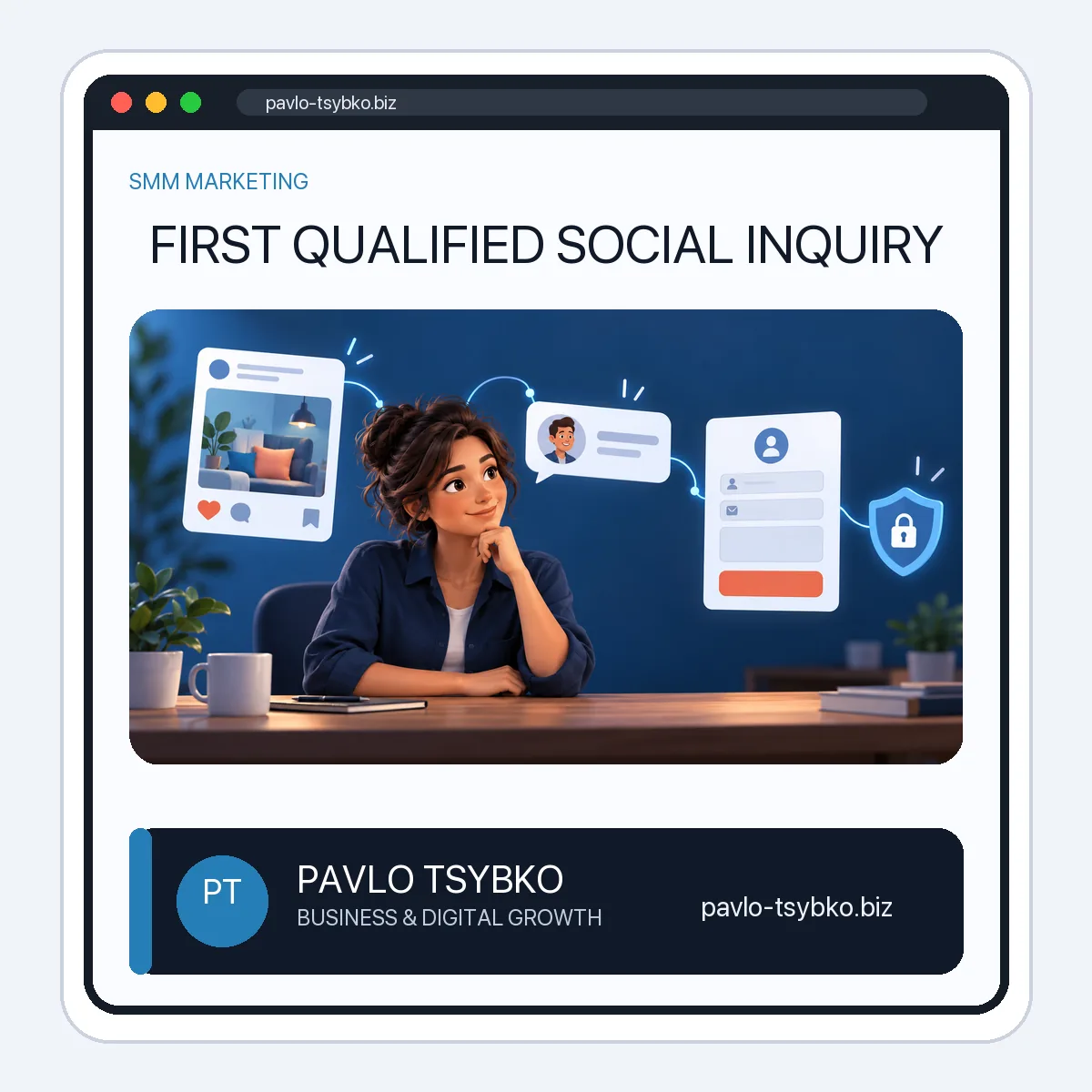
A simple content-to-inquiry path is:
- Question: identify one uncertainty the customer has.
- Answer: explain the issue with a practical example or checklist.
- Proof of competence: show your process or a verifiable example, not invented outcomes.
- Action: invite a relevant question, consultation request or brief form submission.
- Response: acknowledge the inquiry, clarify fit and agree on a next step.
Use the same message in the profile, post and landing page so that the visitor does not feel sent to a different offer. The social-brand content-plan guide covers the wider publishing system; this article concentrates on the conversion path.
Write a call to action that sets expectations
“Contact us” is valid but vague. A better call to action names what the person will receive and what information is needed to begin. For example: “Describe your website and the main issue; I’ll tell you whether a review would be useful.” Do not promise an exact response time unless the team can consistently meet it. If you use a form, ask only for information required to route the inquiry and explain how you will use it.
Make the CTA visible but not intrusive. One clear link in a profile, a relevant invitation at the end of a post and a simple landing-page form are usually easier to understand than several competing buttons. Test the entire path yourself on mobile: open the post, visit the profile, follow the link, submit a test inquiry and confirm it reaches the correct inbox.
Handle the first message like a service conversation
Prepare a short response that acknowledges the person’s question and asks one or two fit questions. Avoid an automated sales script that ignores what they wrote. If the request is outside your scope, say so and point to a more appropriate resource when possible. Record whether the person wanted the offered service, whether you answered, and whether a next step was agreed. A prompt reply improves the experience, but it cannot by itself guarantee a sale.
Have a clear owner for messages and comments, especially if a freelancer or agency publishes on your behalf. Decide what can be answered publicly and when a conversation should move to a private channel. Never ask a person to post sensitive details in a public comment.
Measure the path without pretending that every click is a client
Review post reach → profile visits → link clicks → inquiries → qualified inquiries → agreed next steps as separate stages. The percentages between stages can reveal friction, but a small sample should be treated as directional, not conclusive. Record dates, the post topic, CTA version and what changed. Do not count impressions as leads or form submissions as sales.
If the path goes through your website, use consistent campaign links to distinguish social sources. Google’s Analytics URL-builder guidance explains UTM parameters such as source, medium and campaign. Do not put names, email addresses, phone numbers or private requests into those URLs or analytics events; Google’s PII guidance explains that restriction. Attribution will still be incomplete when people return later, use a different device or contact you outside the tracked path.
A small first-inquiry test
For a limited test, choose one offer, one customer question, one channel and one primary CTA. Publish a few useful answers in formats your team can sustain, then review the inquiry log after an agreed period. If people see the post but never visit the profile, revise the relevance or opening. If they visit but do not click, clarify the offer. If they click but do not inquire, inspect the destination and form. If inquiries arrive but rarely fit, revisit the promise and qualification criteria. Change one major variable at a time and document the observation.
This is a way to learn, not a guarantee of a “first client” on a fixed schedule. If you want help diagnosing your current path, contact Pavlo Tsybko with your offer, audience, profile and contact page—without sharing private customer data.