How to Choose a Social Media Platform for Your Business
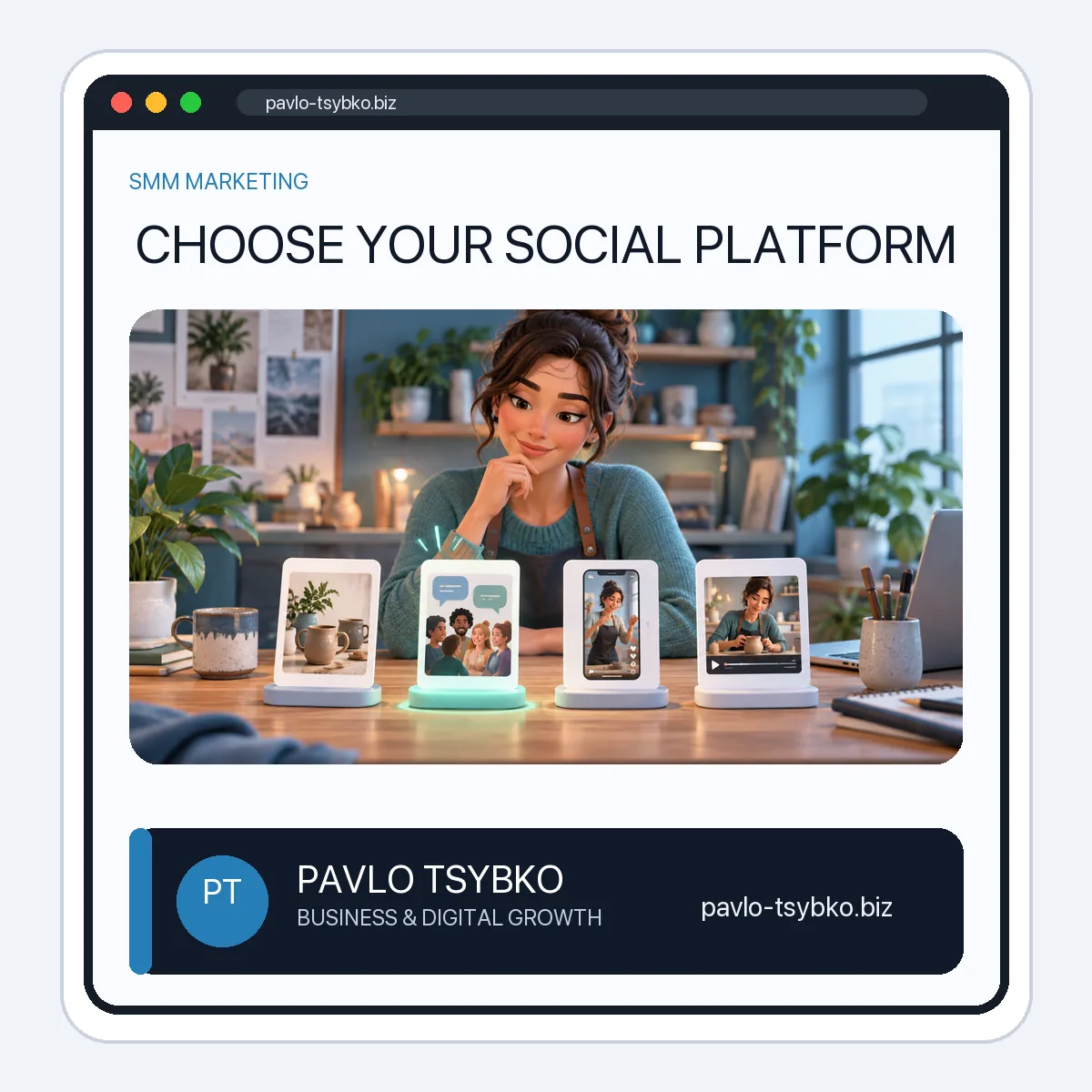
Which social media platform is best for your business? There is no reliable answer based on a network’s overall popularity. The right starting point is where your actual customers pay attention, what they need to see before they trust you, and what your team can publish and answer consistently. A business with strong product photography may have a different first choice from a consultant whose buyers need long explanations or a local service that relies on direct inquiries.
This guide helps a small business choose one primary social platform, test it with a manageable plan, and decide whether to continue. Examples of platform fit are illustrative, not claims that a particular customer achieved a specific result.
Start with customers, not an account list
Describe one customer segment, its purchase question, and the action you want after a useful interaction: a message, consultation, store visit, booking, or purchase. Ask existing customers how they found you and what content helped them decide. Review the platforms on which people already discuss the type of problem you solve. A competitor’s follower count is not proof that the same channel will work for you.
Also decide who will own replies. A platform can generate interest, but unanswered messages and comments can weaken the customer experience. If you can only maintain one channel well, start with one. Your website, contact page, and any booking flow should still work independently of that platform.
Use five questions to shortlist a platform
- Audience: Can you find evidence that the people you want to serve are active there, in the locations and languages you serve?
- Format: Can you produce useful examples in the platform’s natural format—photos, short video, in-depth video, or conversation—without inventing claims?
- Customer journey: Can an interested person move from the post to a clear next step, such as a relevant page, booking, or message?
- Capacity: Can someone publish, moderate, reply, and keep basic information current for several weeks?
- Measurement: Can you record useful inquiries and qualified actions rather than judging success only by views or followers?
Score each candidate as strong, uncertain, or weak on those five questions. Do not turn the score into a false forecast of revenue. It is a way to make your assumptions visible before you commit time or money.
What each format is good for
| Format or channel | Useful when | Capacity test | Risk to check |
|---|---|---|---|
| Instagram-style visual content | Customers benefit from seeing products, work, places, or a visual process. | Can you create honest photos or short clips and answer inquiries? | Attractive posts may not explain pricing, availability, or next steps. |
| Facebook pages or communities | Conversation, local updates, events, or a group are relevant to your audience. | Can someone moderate comments and keep business details current? | A large group is not automatically a pool of qualified buyers. |
| Telegram channel or community | People explicitly want ongoing updates or a direct community relationship. | Can you give subscribers a reason to stay and manage replies? | A channel broadcasts to existing subscribers; it is not a substitute for finding them. |
| TikTok-style short video | You can demonstrate a product, process, or useful answer concisely on video. | Can you make repeatable videos and learn from audience response? | Views can be broad while purchase intent is weak. |
| YouTube video | Customers need demonstrations, comparisons, or more detailed explanations. | Can you script, record, edit, and maintain accurate video information? | Production effort may exceed the value of an untested topic. |
These are format considerations, not demographic rules. A particular market may behave differently; validate with your own audience. Platform features and measurement screens change, so use current official help rather than relying on an old screenshot.
Instagram and Facebook: prove the visual or community fit
For a visually explainable offer, collect examples customers would actually want to inspect: product details, a process, before-and-after evidence with permission, team expertise, or answers to repeated questions. The post should lead to accurate service information and a contact route. If your audience is primarily asking local questions or participating in a relevant community, a page or group may be useful—but it needs moderation and a clear policy for replies.
Do not choose either platform simply because a competitor posts frequently. Review whether their content helps customers make decisions, then test your own offer and response process. For a channel-agnostic publishing workflow, use the step-by-step social promotion plan.
Telegram: separate distribution from discovery
Telegram can support an owned stream of updates and a community of people who have chosen to join. Its official FAQ distinguishes channels for broadcasting from groups for conversation. That difference matters: a channel may be useful for product updates, educational notes, or member communication, but you still need a legitimate path through which relevant people discover and subscribe.
Plan what subscribers will receive, how often, who answers questions, and what happens when a customer needs private support. Avoid adding people without consent or using a channel as a substitute for a working website and customer service. If a Telegram audience is already part of your business, test whether updates lead to useful conversations or repeat engagement, not just subscriber counts.
TikTok and YouTube: choose the video job before the video platform
Short video may help if you can show one practical idea, demonstration, or answer quickly. Longer video can be useful when a buyer needs a walkthrough, comparison, or detailed explanation. The decision is not simply short versus long: consider the questions customers ask, the production effort your team can sustain, and the action viewers should take next. TikTok’s Creative Center help is an official place to inspect current creative tools and examples; an example there is inspiration, not proof that your business will get the same outcome.
YouTube’s Audience reports can help an existing channel understand viewers and formats, while YouTube notes that some audience fields can be limited. If you are starting from zero, interview customers and test a small set of useful topics before committing to a production-heavy schedule.
What about region-specific networks?
The older article also covered VKontakte and Odnoklassniki. They should not be recommended—or dismissed—solely from a generic global platform list. Include any regional network only when it fits your target country, language, customer evidence, legal obligations, and brand position. For this English guide there was no verified audience evidence supporting those sections, so they are not presented as default recommendations. A business with a documented audience in a specific market should make that decision from its own data and applicable rules.
Run a small, measurable platform test
- Pick one platform and one customer question. Write a simple hypothesis: “People considering this service need to see how the process works before they book.”
- Prepare a small content set. Create a few genuinely different answers, examples, or demonstrations. Reuse facts, but adapt the format rather than copying the same caption everywhere.
- Make the next step obvious. Use a relevant service page, booking route, or message process. Test it on a phone.
- Record the baseline and effort. Include time spent creating and answering, any paid spend, relevant visits, qualified inquiries, and customer feedback.
- Review on a fixed date. Compare what people asked and did, not only impressions, likes, or follower growth. Decide whether to improve the offer, change the format, continue the platform, or stop.
Do not claim that a single post caused a sale when the customer also saw search, email, or a referral. Ask new customers how they heard about you and use the answer alongside platform and website data. If no useful inquiry appears, inspect the message and conversion path before adding more platforms.
Choose the channel you can serve well
For most small teams, the best first platform is not the one with the largest headline audience. It is the one with a credible match between customers, useful content, response capacity, and a measurable next step. Keep the rest on a shortlist until the first experiment teaches you something. If you need to compare social media against search, content, and advertising first, read our promotion-channel comparison.
If you would like a second opinion, visit Pavlo Tsybko’s author page and share your offer, target audience, the channels you are considering, your current examples, and the customer action you want. A useful review should clarify trade-offs and a test plan—not promise reach or sales.