How to Choose a Facebook Ads Agency
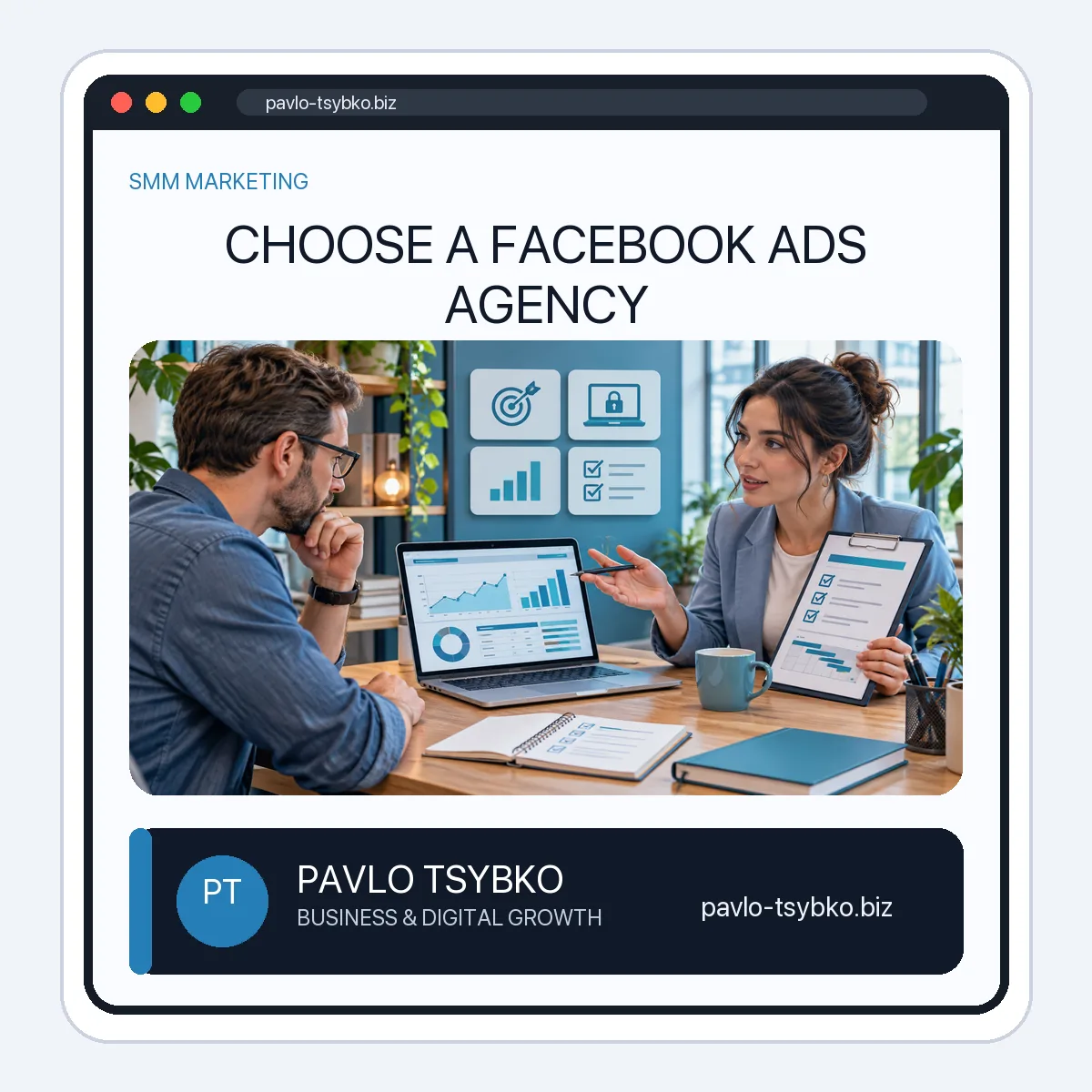
Updated November 4, 2026. This buyer’s checklist helps you compare providers; it is not a claim that any agency can guarantee cheaper inventory, leads or sales.
A Facebook ads agency can help plan, produce, run and review campaigns. The right partner depends on your business goal, team capacity and the work you actually need—not the largest promise in a sales pitch. Before asking for proposals, define what a successful first test would mean and what you want to retain if the partnership ends.
Start with the problem you need solved
Do you need campaign setup, creative production, landing-page work, tracking, ongoing optimization or training for an in-house team? These are different scopes. An agency that manages ads cannot fix an offer customers do not understand unless that work is included. Write down the customer action you care about—qualified inquiry, booking or order—and the budget you can safely test.
If your Page or website is incomplete, first review our Facebook for Business guide. If the campaign itself is undefined, use the Facebook ad planning checklist. A provider should be able to discuss those foundations before asking for a larger spend.
Seven questions to ask a Facebook ads agency
- Who will do the work? Ask which person will plan, build, monitor and report on campaigns. Clarify whether work is delegated to another contractor and who will answer your questions.
- What does the first month include? Request a written scope covering audit, tracking checks, creative, campaign setup, review cadence and decisions. A list of vague activities is not a deliverable.
- How will you define and measure a useful result? Ask how the team distinguishes a qualified lead or sale from clicks, impressions and unqualified messages. Check how it handles incomplete tracking and small sample sizes.
- Who controls the business assets? Before access is granted, agree who owns or administers the Page, ad account, creative files, datasets and connected website. Use the current business tools to grant only the access needed for the agreed work. Avoid sharing a personal password. Confirm how access will be removed at the end.
- What do the fees cover? Separate media spend paid to the platform from agency fees, creative production, landing-page work, software and tax where applicable. Ask whether fees change with spend or scope and who approves extra charges.
- How will decisions and reports work? A useful report should show spend, the agreed business action, quality of inquiries, what changed and what the next test will be. Ask how often you will review results and who can pause spending.
- What happens when the engagement ends? Put notice period, files, access, campaign history, reporting and handover responsibilities in writing. The answer should be clear before the first campaign is launched.
Ask for relevant evidence, not a dramatic screenshot
A credible provider can explain its process and show work relevant to your situation, with client permission and enough context to interpret it. A chart of revenue without spend, time period, margin or attribution does not demonstrate that ads caused the result. A testimonial is useful only if it is genuine and relevant. Do not require confidential client data; a redacted example of a brief, creative test or report may be enough to judge the team’s reasoning.
Ask what did not work and how the provider changed course. A team willing to explain uncertainty is often more useful than one that guarantees a return before inspecting your offer and sales process. If the proposal relies on “special cheaper ad inventory” or a guaranteed price per lead, ask for a verifiable explanation. Do not accept a claim simply because it sounds technical.
Compare proposals on total cost and responsibilities
Put competing proposals side by side. For each one, record the actual monthly fee, ad spend, setup costs, included creative, tracking work, report frequency, access model, cancellation terms and the named owner of each task. The lowest fee is not always the lowest total cost; the most expensive package is not automatically the best fit.
Use your own customer economics to decide what the test can afford. Our Facebook advertising cost guide explains how to plan a test budget without copying old average CPC figures. Ask the provider to state assumptions separately from verified numbers and to agree on a stop condition.
Check account safety and access before work begins
Keep a record of the business assets being used and the people who can access them. Grant roles through the current Meta business tools where available, with permissions appropriate to the task. Do not send passwords or authentication codes to an agency. Ask who can change payment settings, export data or invite others. Review access periodically and revoke what is no longer needed. Meta’s settings can change; consult the official Meta Business Help resources for the current workflow rather than following an old screenshot.
If a provider insists that you must move every asset into an account you cannot inspect, ask what you will retain if you leave. Ownership, billing and handover are operational questions, not minor setup details.
Red flags worth pausing for
- A guarantee of sales, a fixed cost per lead or access to supposedly cheaper placements without evidence.
- Pressure to raise spend before the offer, tracking and response process are checked.
- No separation between platform spend and management fees.
- Reports that show only reach or clicks when the goal is qualified customers.
- Requests for your personal login, password or verification code instead of scoped access.
- No written scope, named contact, review schedule or handover terms.
A practical shortlist decision
Interview a small shortlist with the same brief. Compare the quality of their questions, their proposed first test and the clarity of their terms. Choose a provider that can explain what it will measure, what it cannot promise, and how you will both learn from a limited initial budget. If your team needs to keep the capability internally, digital marketing team training may be a better fit than full outsourcing. For implementation support, see our social media marketing services and request a scope tailored to your business.