How to Increase Sales in a Small Business: A Practical Guide
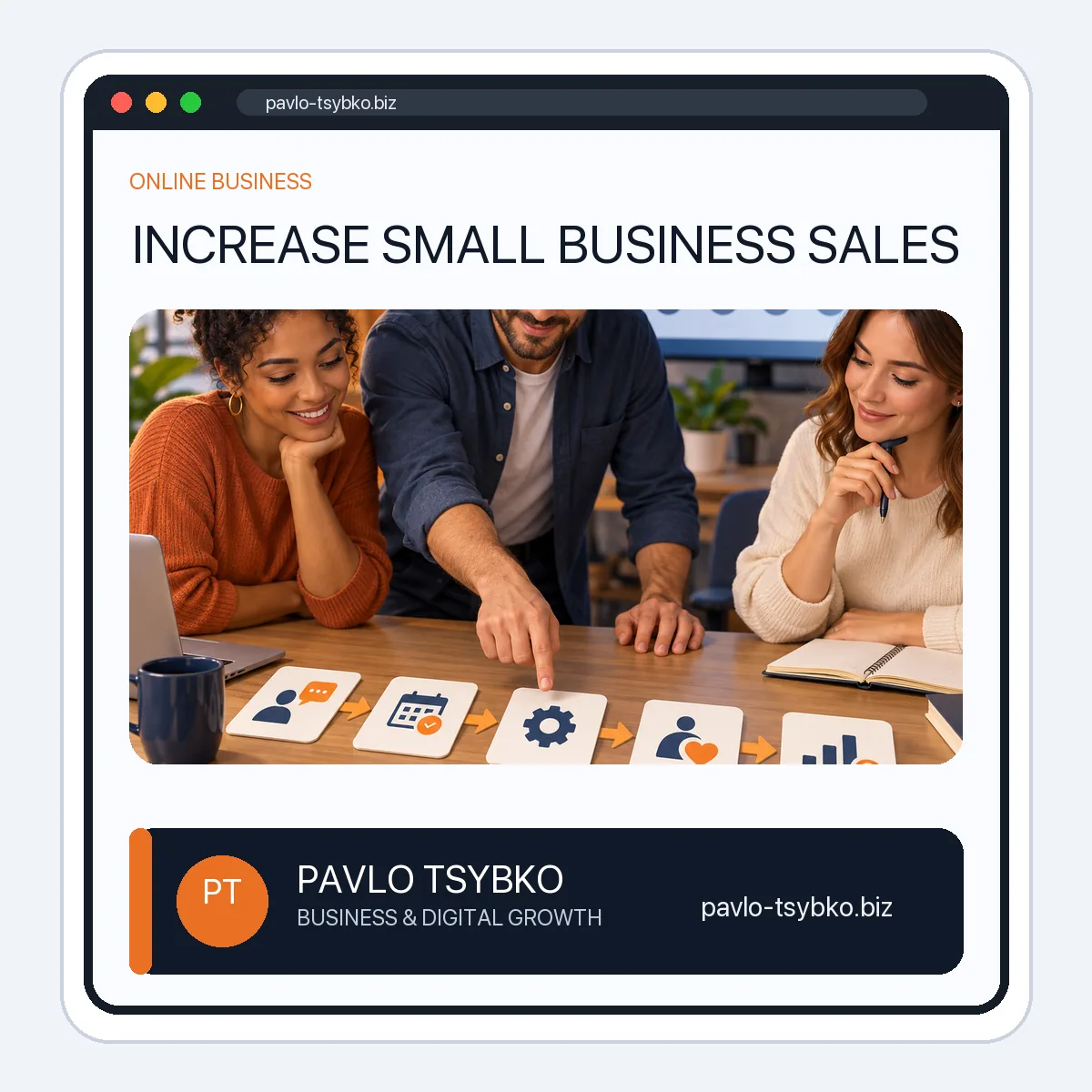
How can a small business increase sales without relying on tricks or a larger ad budget? Begin by finding where a suitable customer gets stuck: understanding the offer, reaching the business, receiving an answer, deciding whether it fits, or completing the purchase. This guide is for online and service-based small businesses that want to improve that path one step at a time. It cannot promise a particular sales increase.
Measure the current sales path before changing it
Write down the stages a customer actually passes through: relevant visit or referral, inquiry, qualified inquiry, proposal or checkout, completed sale and repeat purchase where applicable. Use your own definitions. A website click is not an inquiry, and an inquiry is not a sale. If the volume is small, record counts alongside rates so that one unusual customer does not make a percentage look more precise than it is.
Review recent inquiries, abandoned forms and the questions your team hears most often. Note the stage with the clearest friction, but do not assume that the last stage is the only problem. For example, a low proposal acceptance rate may mean the price is unclear, the offer is a poor fit, or the wrong audience was attracted at the start.
Make the offer and its boundaries easy to understand
A useful offer states who it is for, the problem it addresses, what the customer receives, what is outside scope and how the next step works. Replace broad claims such as “we grow your business” with a concrete description of the work. Show a real process or an example you are allowed to publish; do not invent client results. Make pricing or the method for obtaining a quote understandable enough that a suitable customer can decide whether to contact you.
Check the offer page on a phone. Can a visitor find the primary action, understand required information and submit it without broken fields? If there are several competing calls to action, choose the one that best matches the page’s purpose. The goal is not to force everyone into a form; it is to make the appropriate next step easy.
Improve the response to qualified inquiries
Assign an owner to every incoming channel: form, email, phone and social messages. A small team does not necessarily need a complex CRM, but it does need a reliable record of the inquiry, consent, status, next action and owner. Automate reminders only after the basic response process works; automation cannot repair a vague offer or an unhelpful reply.
Answer the person’s actual question, clarify fit and agree on a next step. A short response template can prevent omissions, but it should not become a script that ignores the customer. Ask only for information needed to assess the request, and avoid placing private customer details in public comments or tracking URLs. If the service is not suitable, explain that honestly rather than pushing an unrelated sale.
Remove friction from proposals and checkout
For services, a proposal should restate the customer’s problem, scope, deliverables, timing, price basis and decision process in plain language. For an online purchase, check the checkout flow, payment options, delivery terms and support contact. Test each path yourself on mobile and confirm that the team receives the submitted inquiry or order. Technical errors and unclear terms can lose customers even when the marketing message is relevant.
Follow up when it is useful and welcomed: answer an unanswered question or provide the agreed next step. Do not treat repeated pressure messages as a substitute for clarity. If you offer an upgrade or complementary service, explain why it fits the customer’s stated need and disclose the added cost. An upsell that is not relevant can damage trust.
Use promotion to bring the right people to the right page
Organic search, useful articles, social posts and paid campaigns can introduce your offer, but they should point to a page that answers the same need. Do not buy more traffic before checking whether existing visitors understand the offer and can contact you. If you test paid search, choose a specific service intent and measure qualified inquiries separately from clicks. For a social first-contact path, see the guide to a first qualified inquiry from social media.
Promotions should be truthful. A genuine limited-capacity offer can explain its real limits; a fake countdown or fabricated scarcity is not a sound sales process. The US Federal Trade Commission’s dark-patterns report identifies misleading countdown timers as a way consumers can be deceived. Check applicable rules in the markets where you sell.
Track a small set of outcomes and test one change
Choose a few measures you can maintain: relevant visits, qualified inquiries, proposals or carts, completed purchases, and reasons a customer did not proceed when voluntarily shared. Calculate rates between adjacent stages, but keep the underlying counts visible. A form submission can be a useful website event; it is still not proof of a completed sale. Google Analytics calls business-important actions key events; define them to match your real process and verify the implementation before trusting a dashboard.
Pick one friction point and one hypothesis. For example: “People ask what is included in the setup fee; adding a scope table may reduce that uncertainty.” Record the old page, the change, the date and the observations. Give the test enough time for your normal buying cycle, then decide whether to keep, revise or reverse the change. Avoid declaring success from a few clicks or assigning every sale to one post when the customer had several touchpoints.
A practical four-week improvement sequence
- Week 1: map the real inquiry-to-sale stages and inspect ten recent customer questions or as many as you have.
- Week 2: clarify the offer page and test its contact or checkout path on desktop and mobile.
- Week 3: give each inquiry an owner, agree on a useful response pattern and record fit and next steps.
- Week 4: review stage counts and customer feedback; improve one bottleneck before increasing promotion.
The sequence is a way to diagnose and improve the process, not a timetable for guaranteed growth. If you want a review of your public offer and customer path, contact Pavlo Tsybko with the relevant page and the stage you want to understand; do not send private customer information.