How to Increase Sales Without Paid Ads: A Practical Small-Business Plan
Updated November 13, 2026.
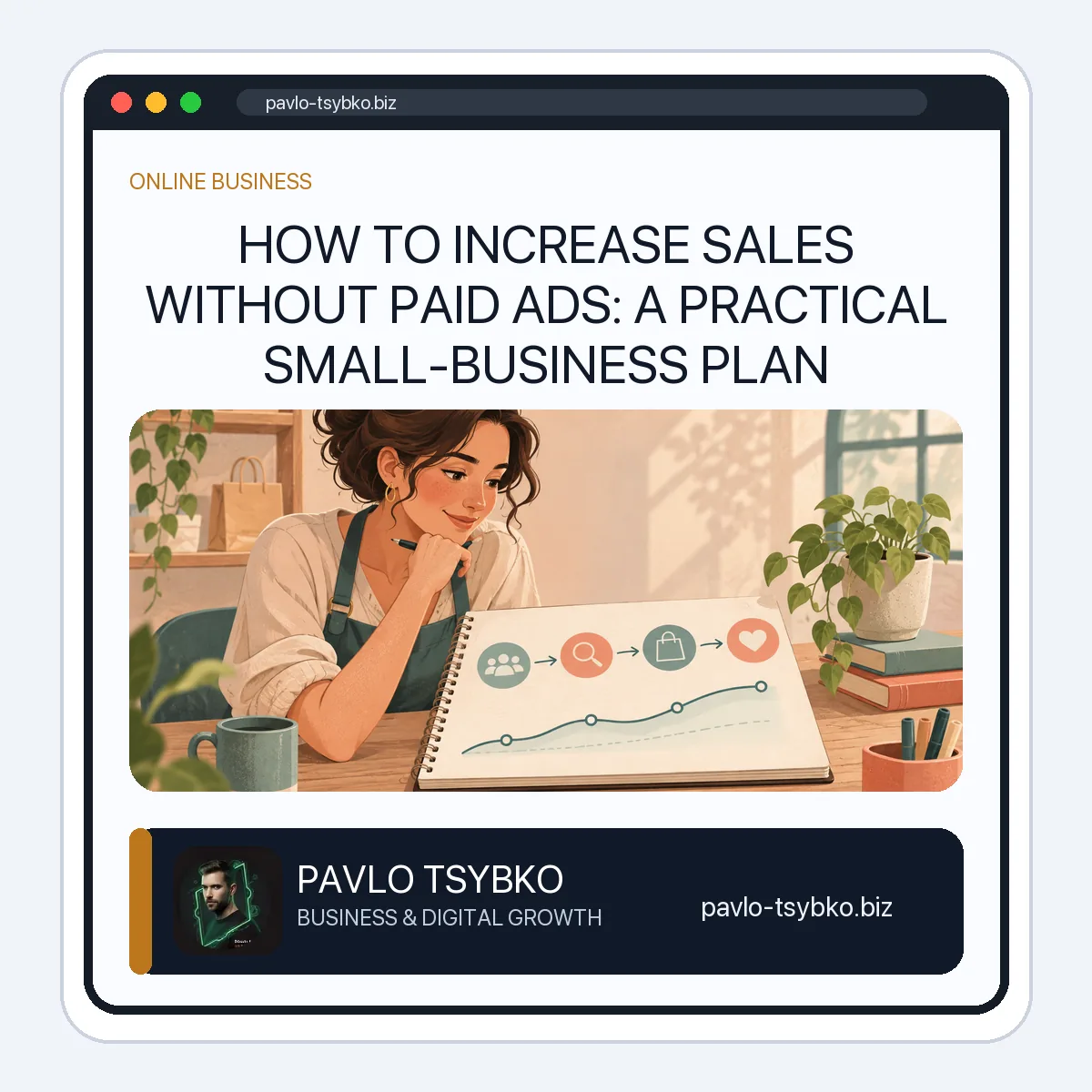
You do not have to buy ads to work on sales. But “without paid ads” does not mean “without cost”: improving a website, speaking with customers, creating useful content, and following up all take time. Nor can any of these steps guarantee more revenue. The useful question is where a potential buyer gets stuck today—and what you can test with the customers and channels you already have.
This guide focuses on improvements that do not require an advertising budget. For a broader view of pricing, sales processes, and marketing channels, see How to Increase Sales in a Small Business.
Start with a small, honest baseline
Choose a period you can compare consistently, such as the last four weeks. Record how many relevant inquiries came in, how many became sales, how much was sold, and how many customers returned. If you have only a handful of inquiries, treat percentages cautiously: one extra sale can make a rate look dramatically different without showing a reliable trend.
Then ask where the journey breaks down. Are people finding the offer but not contacting you? Do they ask the same basic question before buying? Do inquiries arrive but go unanswered for too long? Are first-time buyers satisfied but never return? Choose one bottleneck rather than trying to redesign the entire business at once.
Customer conversations can help you understand what the numbers miss. Ask recent buyers what made the decision easy and ask lost prospects what remained unclear—without pressuring them for a particular answer. The U.S. Small Business Administration's market-research guidance describes direct customer research as a way to learn about the buying experience and possible improvements.
Make the offer easier to understand
A visitor should be able to tell what you provide, who it is for, what is included, and how to take the next step. Put those answers close to the main call to action. If the price depends on scope, explain the factors that affect a quote instead of displaying an unsupported “starting at” figure. Show relevant examples only when you have permission and can explain what they demonstrate; an old case is not evidence of a result a new customer will get.
Check the path on a phone. Can someone read the page without zooming, open the contact option, and understand what will happen next? Fix broken links, confusing forms, and outdated claims before investing time in new traffic. A clearer page cannot create demand by itself, but it can remove avoidable friction for people who are already interested.
Follow through with existing customers
After a sale, deliver what was promised and make support easy to reach. Notice recurring questions, complaints, and requests: they may show an opportunity to improve the product, explain it better, or offer a relevant next service. Do not assume every customer wants an upsell.
If you contact a past customer, make the message useful and appropriate to the relationship. Ask for permission where needed, respect an opt-out, and do not turn a service conversation into an unexpected marketing list. A short check-in about the completed work is different from sending a campaign to every address you have collected. Track whether follow-up actually helps customers, not merely whether messages were sent.
Make referrals easy, not forced
Satisfied customers may know someone with a similar problem. You can make it easy to share a clear description of your work, a relevant case, or a direct link. Ask at a natural point after you have delivered value; do not imply that a referral is required. If you use a formal reward or partner arrangement, check the applicable disclosure rules and keep the recommendation genuine. Do not buy testimonials, invent reviews, or promise a rating.
Partnerships can work the same way. Look for a complementary business whose customers have a related need, and define what each partner will actually do. Test a small introduction or useful joint resource before building an elaborate referral program. Count qualified conversations and completed sales, not just introductions.
Build organic discovery around real questions
Write or improve a page that answers a question customers repeatedly ask. Show the process, the limits of the offer, and the next step in plain language. Update outdated pages before publishing a large volume of new ones. A useful article can be shared directly with a prospect, cited by a partner, or discovered through search, but organic visibility takes work and is not guaranteed.
Choose only channels you can maintain. For one business that may be a helpful website guide; for another, a professional community, a product demonstration, or a relevant social platform. Reusing a good answer where your customers already spend time is more sustainable than opening accounts everywhere. Measure the time spent on each channel alongside the inquiries it produces.
Run a four-week test
In week one, record the baseline and select one bottleneck. In week two, make one focused change—for example, clarify the offer, repair the mobile contact path, or prepare a useful answer to a common question. In week three, observe relevant inquiries and ask a few customers whether the change helped them. In week four, compare the same measures with the baseline and decide whether to keep, adjust, or stop the change.
Write down what else changed during the test: seasonality, a new product, a referral from a large partner, or a change in how you counted inquiries. Small samples rarely prove that one edit caused a sales increase. The point is to make a better-informed next decision, not to manufacture a success story. The SBA's marketing-and-sales guidance likewise recommends comparing marketing costs with revenue and revisiting the plan as evidence comes in.
The practical next step
Pick the most visible source of friction in your current sales path. Fix it, give it time, and compare real outcomes with your baseline. If the underlying offer or target customer is unclear, start with the broader small-business sales guide before choosing a channel. No paid-ad budget is required for this experiment, but your time and the quality of the customer experience still matter.