Instagram Marketing for Hotels: From Profile to Booking
Updated November 4, 2026. This practical guide is for independent hotels and small hospitality teams. Instagram can help a guest evaluate a stay, but it cannot guarantee bookings or replace a reliable booking process.
A hotel’s Instagram account is most useful when it answers the questions a guest has before reserving: What is the room really like? What is included? How easy is it to get there? What happens after I book? Attractive photos matter, but the path from a post to accurate availability, terms and a secure booking page matters just as much.
1. Decide which guest and decision you are helping
A family planning a week away needs different evidence from a business traveler choosing a one-night stay. Choose a priority guest segment and list its practical questions: room layout, accessibility, work space, breakfast, transport, parking, cancellation policy and local activities. Compare those questions with what the hotel can actually provide. Do not use an aspirational image that hides an important limitation.
Set one measurable goal for the first review period, such as visits to the booking page or qualified reservation inquiries. Profile visits and video views can be useful context, but they do not by themselves prove bookings or revenue.
2. Make the profile a reliable route to booking
Use the hotel’s recognizable name, location, contact details and an active link to a mobile-friendly page where guests can check availability and conditions. If the property uses a booking engine, test the full journey on a phone: dates, room selection, price, taxes, cancellation terms and payment. If the link is broken or prices differ unexpectedly, fix that before buying traffic.
Choose an account type and contact features that fit the hotel’s current setup, and verify current options in Meta Business Help. Avoid relying on an old screenshot of the Instagram interface. Document who owns the account and grant staff or contractors appropriate access rather than sharing a personal password.
3. Show the stay accurately
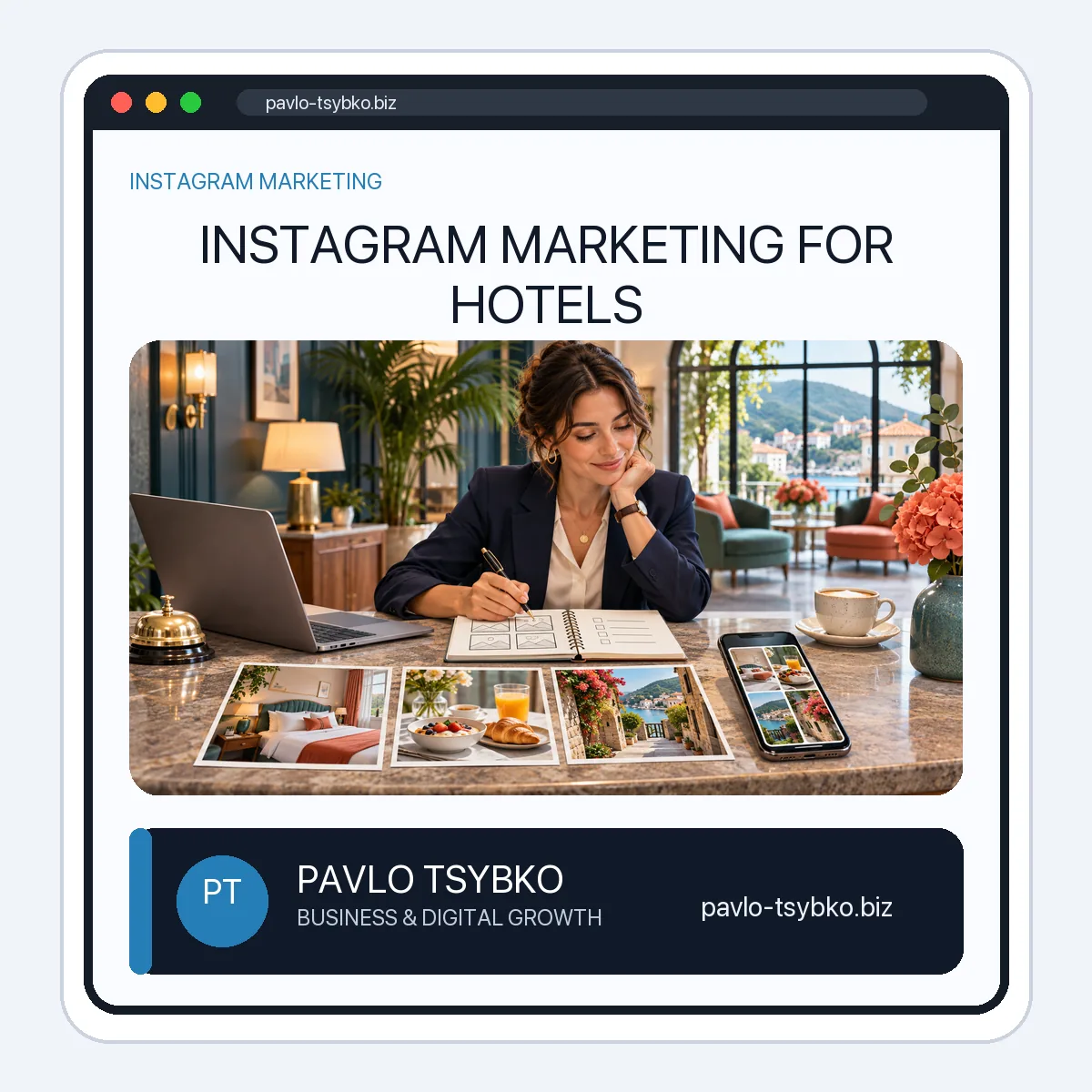
Plan a small library of original, current images and short videos: each room type, bathroom, common areas, breakfast, the entrance and nearby places. Photograph the actual property and label material differences between room categories. Include details that affect a choice, such as stairs, workspace, family facilities or seasonal closures. Good light and clear framing help, but authenticity is more valuable than a heavily edited image that creates the wrong expectation.
Get permission before featuring guests, staff stories or user-generated photos. Do not reveal a guest’s identity, room number or travel dates without explicit consent. If a creator receives a stay or another benefit in exchange for content, agree on deliverables and disclose the relationship appropriately.
4. Match content to the booking journey
- Discovery: show the setting, neighborhood and the kind of trip the property suits.
- Consideration: answer room, amenities, transport and policy questions with a walkthrough or concise FAQ.
- Decision: point to live availability, clear terms and a secure booking route rather than an ambiguous “DM for details.”
- After the stay: invite feedback through the hotel’s normal process and seek permission for any public use.
Stories, short videos, carousels and photos can each serve a different job. Choose the format that explains the answer well and that the team can produce consistently. There is no universal daily posting requirement or hashtag formula that guarantees reach.
5. Respond to inquiries without turning DMs into a payment system
Assign a person to answer common questions about availability, accessibility, check-in and policies. Keep replies accurate and courteous, then direct guests to the hotel’s official booking page or approved reservation channel for current rates and payment. Do not ask for payment-card details in a direct message. If the hotel cannot respond quickly, state the expected response time and give an alternative contact route.
6. Test promotion and partnerships carefully
Paid Instagram promotion may help a specific seasonal offer or audience, but only after the booking page and follow-up work. Define the offer, location, dates, budget and what counts as a useful inquiry before launching. Separate the ad spend paid to Meta from content-production or management fees. Review the Instagram ads planning guide for a broader campaign checklist.
For creator partnerships, choose relevance over follower count. Agree on honest representation of the property, usage rights, disclosure and how guests can reach the hotel. Avoid giveaways that mainly attract people who will never consider a stay. A collaboration is a test of fit, not a guaranteed source of reservations.
7. Measure the path, not just the feed
Use a trackable link to the hotel’s website where practical, and compare website sessions, availability searches, qualified inquiries and confirmed bookings that can reasonably be attributed to Instagram. Attribution will be incomplete: a guest may discover the property in a Reel and book later through search or another device. Ask guests how they found the hotel when appropriate, and review trends over several weeks instead of claiming every booking came from a post.
Keep a simple record of content topic, format, date, link and result. If people engage with room videos but abandon the booking page, the next improvement may be the page or rate explanation, not more videos. If inquiries repeatedly ask the same question, answer it visibly in the profile, content and booking flow.
For the underlying account plan, see the Instagram marketing guide for small businesses. If your property needs a defined implementation scope, review the Instagram marketing service. Neither a provider nor this guide can promise a specific number of bookings without understanding the property, market, season and measurement.