
Local SEO for Small Businesses: A Practical Checklist
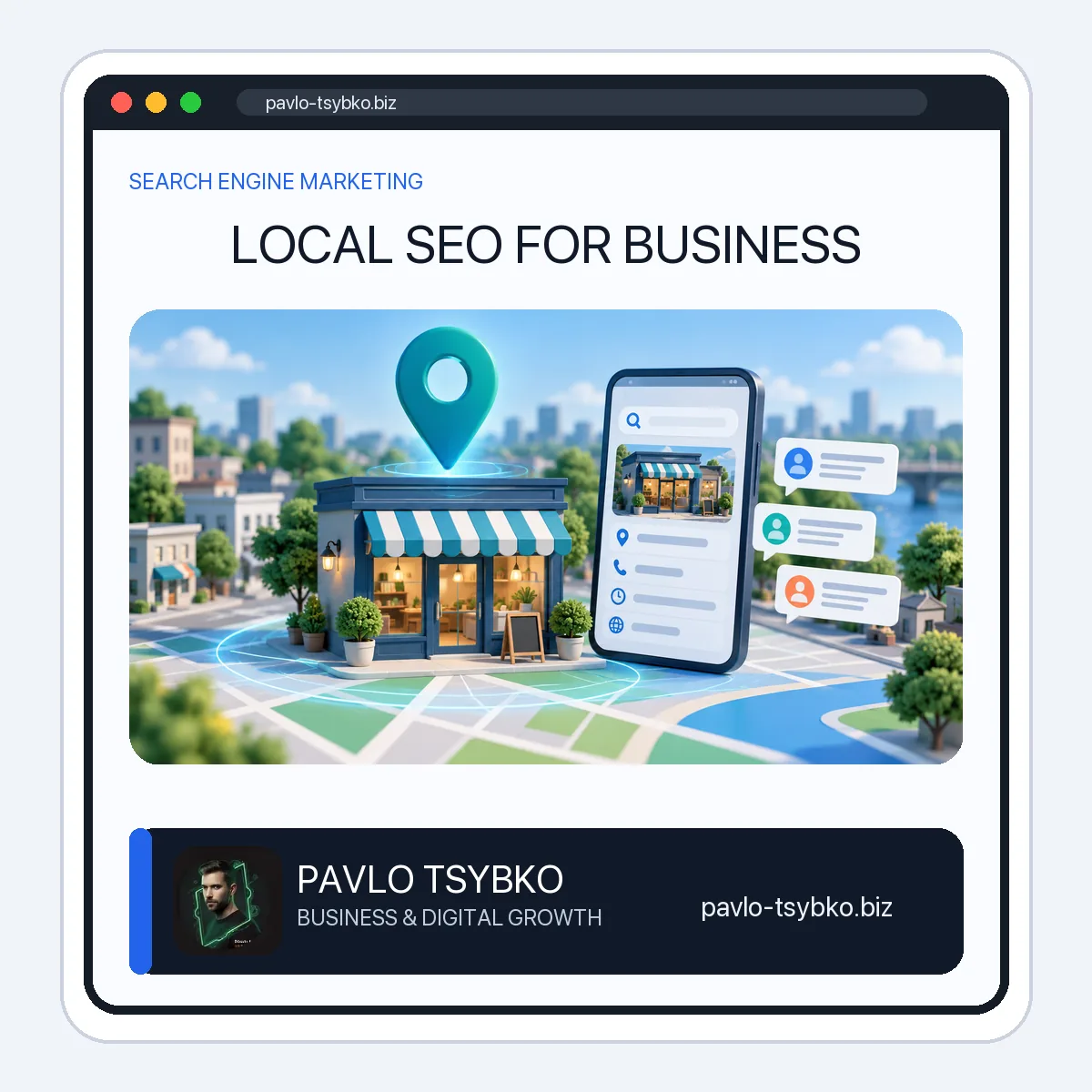
Local SEO helps a real business become easier to find when nearby customers search for a relevant service or place. It is not a trick for adding city names to every page. A useful local presence starts with accurate business details, a website that explains where and how you serve customers, and evidence that people can trust.
This guide is for small businesses with a genuine local presence or service area. It gives you a practical order of work for your Business Profile, website, reviews, and measurement. It does not promise a top map position: Google’s local ranking guidance says local results are mainly based on relevance, distance, and popularity, and no one can request or pay for a better organic local ranking.
Start with the customer and the service area
Write down the services customers actually request, the places you genuinely serve, and how they reach you. A storefront, a service-area business, and an online-only business do not have identical local-search needs. Check the platform’s eligibility rules before creating a Business Profile; do not invent a physical address or claim cities where you do not operate.
Choose one primary service page or location page to improve first. A visitor should be able to confirm the service, coverage, contact method, and next step without hunting through unrelated content. If you need to map customer questions to distinct pages, use the keyword research guide.
1. Claim and maintain an eligible Business Profile
If your business is eligible, claim or verify its Google Business Profile and keep the public details accurate. Check the business name, primary category, contact information, hours, service area or address, website link, and available service descriptions. Use the real-world business name; adding keywords to the name merely to attract searches can create misleading information and policy risk.
Make the owner of the profile explicit inside your team, protect account access, and put a recurring reminder on the calendar to update holiday hours and changed services. A correct profile helps customers even before any search-performance effect is measurable.
2. Make your website location information genuinely useful
On the relevant page, explain what you do in that area, how a customer can book or contact you, and any practical limits: travel radius, appointment availability, or pickup conditions. Add a consistent business name and contact details in an easy-to-find place. Show a real address only when it is appropriate and public for your type of business.
Do not generate near-identical pages for every suburb with only the place name changed. Create a separate location page when it serves a genuinely different location or customer need and can carry distinct information such as staff, hours, directions, local examples, or services. Google expects people-first content, not pages created mainly to capture keyword variations.
3. Check citations and details customers rely on
Find the profiles and directories where real customers in your industry or area might look. Correct old phone numbers, duplicate business entries, broken site links, and inconsistent opening hours. A small number of accurate, relevant listings is more useful than bulk submissions to unrelated directories. Record which account owns each listing so future updates are possible.
For a service-area business, make sure the public profile and the website explain the area you cover without exposing a private address that should not be displayed. If you work only online with no qualifying local operation, focus on ordinary website SEO rather than presenting yourself as a local storefront.
4. Earn and respond to genuine customer reviews
Invite customers to share an honest account of their experience, following the review platform’s rules. Avoid purchased, fabricated, or selectively incentivized reviews. Reply to useful feedback, correct factual errors politely, and look for repeated service problems that need an operational fix. Reviews are valuable to readers deciding whether to contact you; they are not simply a number to maximize.
Do not promise a rating or imply that every review will be positive. Build a repeatable request and response process that can be maintained when the team is busy.
5. Make the path from search to contact work on a phone
Open the Business Profile and the linked page on a real phone. Confirm that the correct page opens, the service area is understandable, the phone or booking action works, and the page is readable without horizontal scrolling. A local search often happens while the customer is ready to act. Broken forms, old hours, or a hidden call button can matter more than another paragraph of city keywords.
Use the website performance guide for deeper mobile and loading checks. Prioritize issues that prevent a person from reading or contacting you rather than chasing one perfect lab score.
6. Add structured data only when it matches reality
If your site has a page about an eligible physical local business, relevant LocalBusiness structured data can help describe details such as hours and address to search systems. It must match the visible page and the real business. Google’s LocalBusiness documentation explains required fields and validation. Markup is not a substitute for a real location, an accurate profile, or a helpful page, and it does not guarantee a special result.
7. Build local relationships for people, not link counts
Useful partnerships may include industry groups, local organizations, suppliers, events, or community resources that your customers actually value. A genuine mention can bring relevant visitors even without a ranking effect. Do not buy links or sponsor irrelevant pages merely to manipulate search results. Our off-page SEO guide explains how to evaluate mentions and avoid link spam.
A compact local SEO checklist
- Confirm your actual business model, eligible profile status, services, and service area.
- Correct your Business Profile details and assign an owner to maintain them.
- Improve one relevant website page with clear service, area, proof, and contact information.
- Fix inconsistent details on the few listings customers really use.
- Request and respond to genuine reviews within platform rules.
- Test the full mobile path from local search to call, form, or booking.
- Review search visibility and real inquiries, then work on the largest remaining customer problem.
Measure local visibility and business outcomes
Take a baseline before changing the profile or website. Review the queries and pages in Search Console, relevant website visits, calls or form inquiries you can reliably attribute, and Business Profile performance where available. Keep a dated log of changes. A map position can vary with the searcher’s location and other context, so one screenshot or a third-party rank tracker should not be your only measure.
When performance changes, investigate the whole path: Are the queries relevant? Does the profile point to the right page? Does the page answer the customer’s question? Did real inquiries change? Do not claim that a new listing or a single review caused a ranking movement without stronger evidence.
When this guide is not the right fit
An online-only business with no eligible local presence should not create a fictional location to follow this checklist. It can still improve its website with the DIY SEO starting guide. Likewise, a multi-location company needs real, maintained details for each location rather than a scaled set of copy-paste landing pages.
Next step
Pick one real service area and one page that should help customers there. Fix the profile and page details, then test the mobile contact journey before expanding to more locations. If you want an outside review, contact Pavlo Tsybko with the page, business model, service area, and the customer action you want to improve. A useful review should identify concrete problems and priorities, not promise a particular map ranking.