Paid Search for Matchmaking Services: A Policy-First Planning Guide
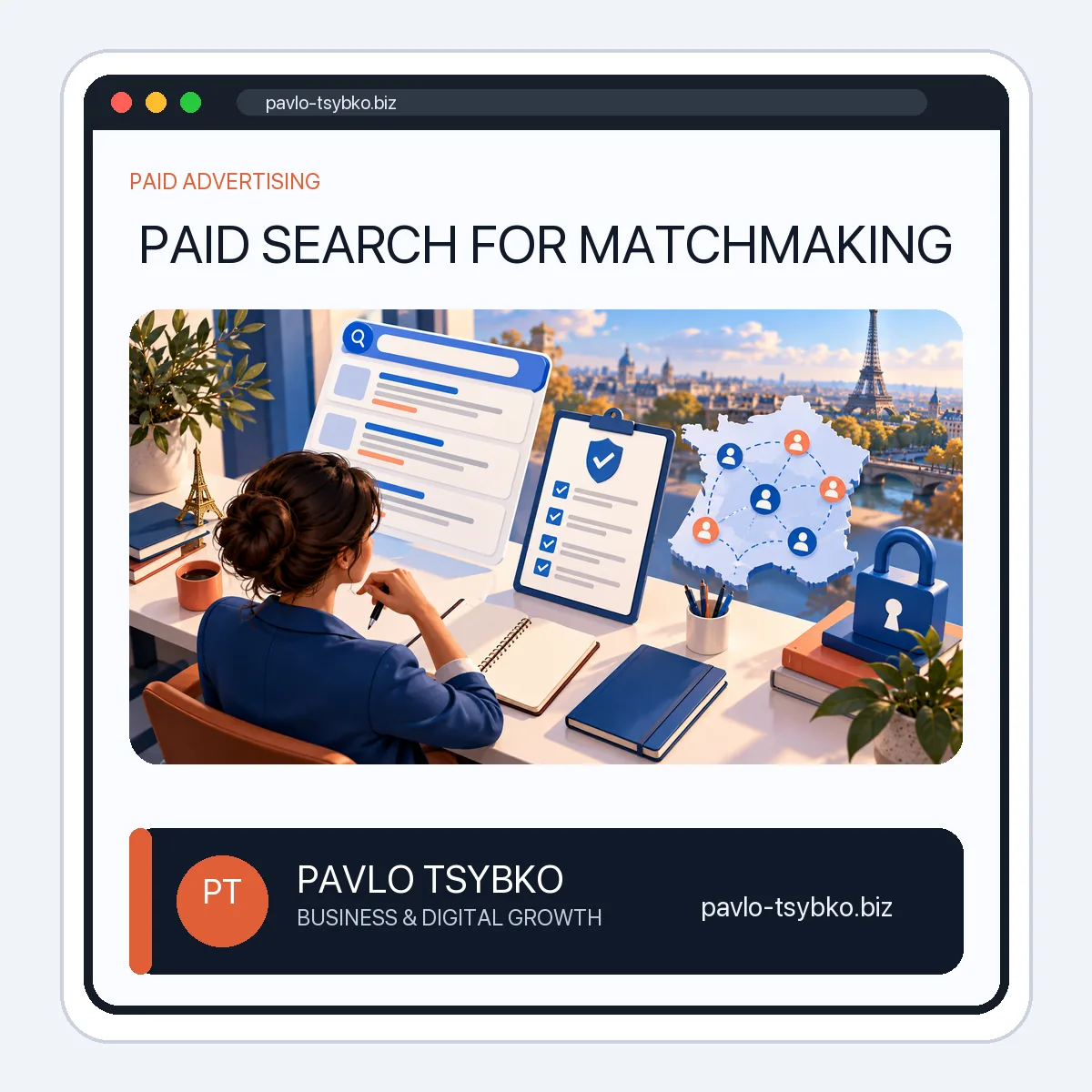
Can a matchmaking service use paid search responsibly? Potentially—but campaign setup starts with eligibility, not ad copy. Google treats matchmaking, matrimonial and dating facilitation as dating-and-companionship advertising. Certification, age restrictions, destination review and local rules can determine whether an ad may run at all. This guide turns an older agency project into a practical planning framework; it does not claim that a particular campaign produced registrations, sales or a return on ad spend.
1. Classify the service before planning a campaign
Describe exactly what the business offers, who can join, which countries it serves and what happens after a visitor submits a form. Do not assume that calling a service a “relationship consultancy” changes its classification. Google’s Dating and Companionship policy explicitly covers matchmaking and matrimonial services. Google says advertisers in this category need certification, and ads may be limited by age, country, local law and other factors.
There is an especially important boundary for cross-border services: Google prohibits transactional international matchmaking and content that exploits socioeconomic differences or stereotypes. A business must establish whether its actual service and landing page meet the current rules before spending on media. If eligibility is uncertain, stop at the policy review; this article is not a workaround for disapproval.
2. Audit the destination, not just the advertisement
The landing page should explain the real service in plain English or the language of the target audience. State who operates it, what a user can expect, whether there are fees, and how to contact support. Show a current privacy notice and a clear path to request account or data deletion where applicable. Do not use fabricated member profiles, misleading photographs, unverifiable guarantees or an ad promise that the page cannot fulfill.
Before creating ads, walk through the entire sign-up flow on desktop and mobile. Check the page’s loading behavior, form errors, confirmation state, payment disclosures, and any area behind a login. Google may review post-login content during certification. Keep a short record of each page and policy change so the team can explain why a landing page is eligible.
3. Define one measurable action
“More traffic” is not a business outcome. Choose one primary conversion such as a completed, consented inquiry or a verified consultation request. A thank-you-page visit alone can be inflated by duplicate loads; a form submission alone may include spam. Define what counts, what is excluded and who checks lead quality. Keep reporting aggregated whenever possible and avoid sending names, email addresses or relationship details into ad tags. Review Google’s data collection and use requirements alongside the site’s privacy obligations.
A simple measurement plan can record campaign, intent group, landing page, consented inquiry and qualified follow-up. If a CRM is used, match outcomes through approved, privacy-safe processes rather than exposing personal details in URLs or analytics events.
4. Build intent groups and truthful messages
Research the words people use to find a legitimate service, then separate general research queries from queries that indicate readiness to contact an agency. Keep each ad group narrow enough that its advertisement and destination answer the same question. Review the actual search terms after launch and exclude irrelevant or unsafe traffic. The exact queries, locations and match types should be based on the service’s eligibility and real demand—not copied from a generic template.
Write ads that identify the service accurately. Avoid “guaranteed partner” promises, pressure tactics, false urgency and statements that appear to know a person’s private relationship status. For audience design, review Google’s restricted targeting rules for personalized advertising. Do not build a targeting strategy around inferred sensitive personal traits.
5. Set a bounded test before scaling
Estimate an affordable test budget from the cost of a qualified inquiry the business could sustain. Set a daily cap, geographic limits supported by policy, a review owner and a stop condition. Launch only after certification and ad approval where required. Check actual spend and search terms frequently during the initial test; do not raise the budget merely because clicks increase.
Compare qualified inquiries with spend and the landing page experience over a defined period. If results are weak, diagnose the sequence: eligibility → search intent → ad relevance → landing page → form completion → lead quality. Change one meaningful variable at a time and document it. This makes the next decision auditable even when a campaign is too small to support confident performance claims.
A launch-readiness checklist
- The service and every target market have been reviewed against the current dating-and-companionship policy; required certification has been obtained.
- The advertisement, landing page and post-login experience describe the same real, eligible offer.
- Under-18 users are excluded as required, and restricted or prohibited destinations are not targeted.
- Claims, profiles, imagery, pricing and contact details can be verified.
- A privacy-safe, consent-aware primary conversion and lead-quality definition are documented.
- Budget cap, review cadence and stop criteria are agreed before launch.
What this article can—and cannot—show
The previous version of this page was presented as a French marriage-agency success story, but it did not provide a reproducible baseline, campaign dates, spend, qualified-lead counts or permission to publish client results. Therefore, no uplift or conversion claim is repeated here. This is a process guide, not a verified case study. If those records and consent become available, a separate evidence-backed case can explain the actual strategy, limitations and outcomes.
Paid search is just one channel. If the service is ineligible or the economics do not work, compare other channels using the broader small-business promotion framework. For a review of an existing website or campaign plan, contact Pavlo Tsybko with the service description and target markets—without sending private member data.