How to Build a Messenger Sales Funnel Without Spamming Customers
Updated November 2026. This is a practical guide to customer conversations, not a promise that a bot or a messaging app will produce sales.
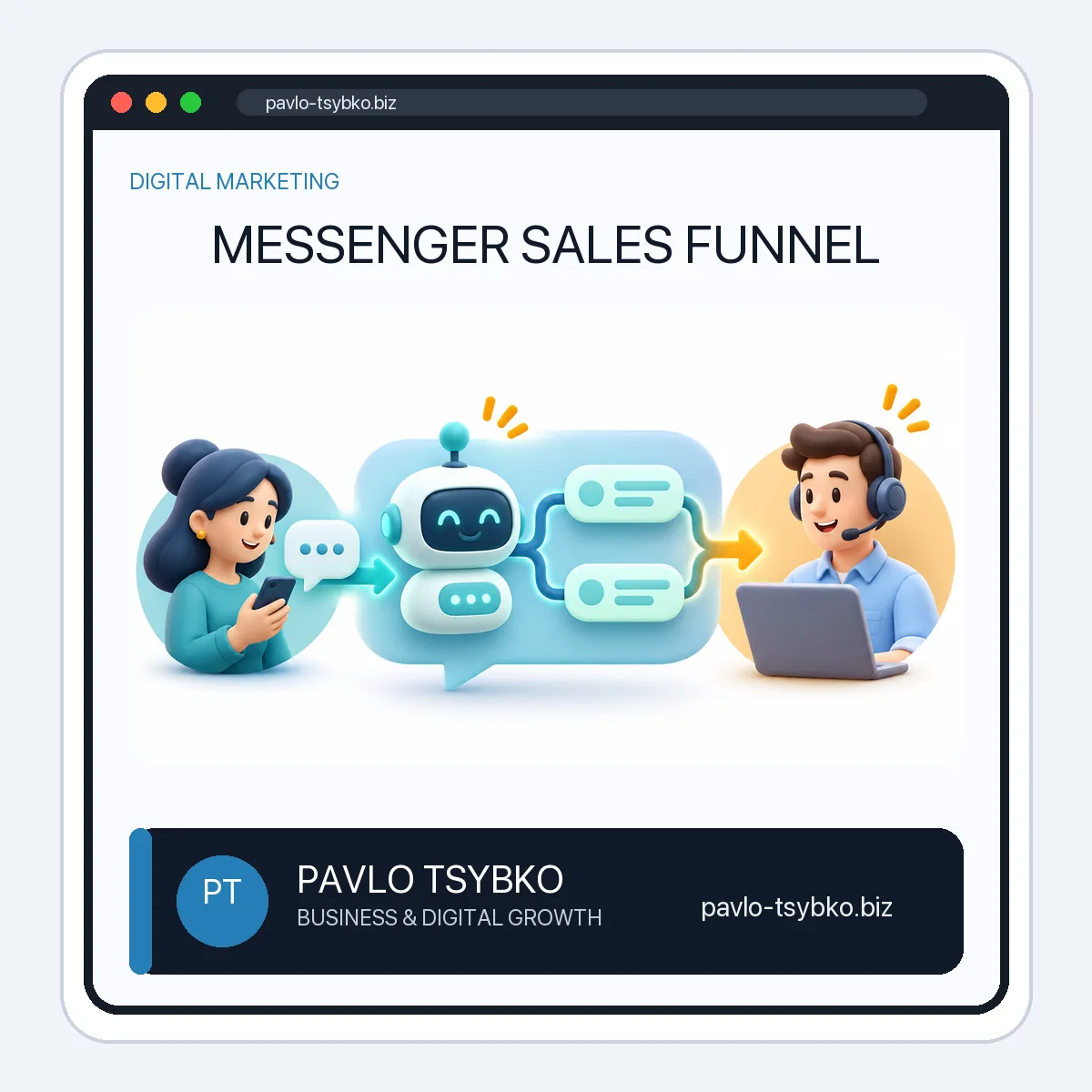
A messenger sales funnel is the path from a person’s first question in a messaging app to a useful answer, a qualified next step, and—when appropriate—a human conversation. It is different from a general online sales funnel: the customer is already in a two-way chat, where timing, consent, context, and handoff matter more than a sequence of landing pages.
Start with the question your customers actually ask. A good chat flow helps someone understand an offer and reach the right person. It does not treat every message as permission to send promotions or force an automated purchase.
1. Choose one channel and one legitimate entry point
Use a channel where your audience already contacts the business and your team can reliably reply. Entry points may include a website contact button, a QR code at a location, a customer-initiated message, or a clearly described ad that opens a conversation. Explain what happens after the click and who will respond.
Do not import strangers into a chat or send unsolicited invitations. Telegram’s Spam FAQ explains that unwanted messages to people who did not expect them can lead to reports and account limits. For WhatsApp, review its current Business Messaging Policy: the policy requires appropriate opt-in for subsequent contact and respect for opt-out requests. Platform requirements can change, so check the applicable policy before launching a campaign.
2. Write the first response for a real need
The opening should acknowledge the source and offer a small number of useful choices, such as “Ask about a service,” “Check availability,” or “Talk to a person.” If an ad invited people to request a consultation, do not begin with a long product catalogue. Let people type a question even if you offer buttons.
Disclose when the first response is automated. Give a realistic reply-time expectation for a human. If the business is closed, say when someone can continue the conversation; do not claim round-the-clock support when it is not staffed.
3. Qualify without interrogating
Ask only what is necessary to recommend the next step. For a service inquiry, that might be the project goal, the current website or channel, and the preferred time to speak. Show why you need each detail. A customer who simply wants opening hours should not have to provide a phone number.
Provide an “I am not sure” option and an easy route to a person. If someone asks about a sensitive issue, an unusual price, or a complaint, move the conversation to a qualified staff member. A bot can collect context, but it should not invent an answer or make an unsupported commitment.
4. Hand the conversation to an owner
Define who receives a qualified inquiry, what context is passed along, and when a reply is due. The staff member should see the customer’s original question and the choices already made, so the person does not need to start over. Keep access to conversation data limited to the people who need it.
For WhatsApp Business Platform, the current policy includes specific rules for business-initiated messages, approved templates, the customer-service window, and clear escalation paths. Do not assume that a workflow approved on one platform is automatically allowed on another. If you use a third-party builder, verify that it supports the applicable policy rather than trusting a sales claim.
5. Keep follow-up relevant and permission-based
A response to an active inquiry is not a blanket subscription to marketing. Separate service updates from optional promotional messages. Tell people what they are signing up for, record consent where required, and give a straightforward way to stop messages. Do not build a “funnel” around mass messages, scraped contacts, or artificial scarcity.
If the person is not ready to buy, a useful answer or a link to a relevant guide may be enough. A respectful conversation can end without another automated reminder.
6. Measure useful outcomes, not message volume
Track the number of customer-initiated conversations, the share that reached a useful answer, handoffs to a person, response time, qualified inquiries, and unresolved or abandoned chats. Review a privacy-safe sample of conversations for confusing branches and repeated questions. More messages or higher bot containment are not success if people cannot get help.
Make one improvement at a time: shorten an opening, clarify a service answer, or fix a handoff. Check whether the change helped the customer and the team before adding more automation.
A small example
Imagine a customer asks a website-development studio in WhatsApp whether it can rebuild a slow business site. An automated reply says it is a bot, offers a short route to describe the site and the main problem, then passes that context to a person. The person replies with clarifying questions and a realistic next step. This is a conversation design example, not a claimed client case or performance result.
Launch checklist
- Pick one channel, one entry point, and one common customer question.
- Write an honest automated opening, two or three useful branches, and a human escape route.
- Check the channel’s current messaging and consent rules.
- Test mobile screens, broken links, unknown questions, after-hours replies, and handoff notifications.
- Review qualified outcomes and customer feedback before expanding the flow.
If you need a broader view of task selection, privacy, and chatbot evaluation, read the business chatbot beginner’s guide. The messenger funnel should remain narrow enough to help a customer, not merely to automate every touchpoint.
Need a conversation map?
Send the channel you use, a common customer question, and your current human follow-up process to mail@pavlo-tsybko.biz. I can help outline a testable, permission-based flow before you choose a bot platform. Outcomes depend on the audience, offer, implementation, and ongoing review.