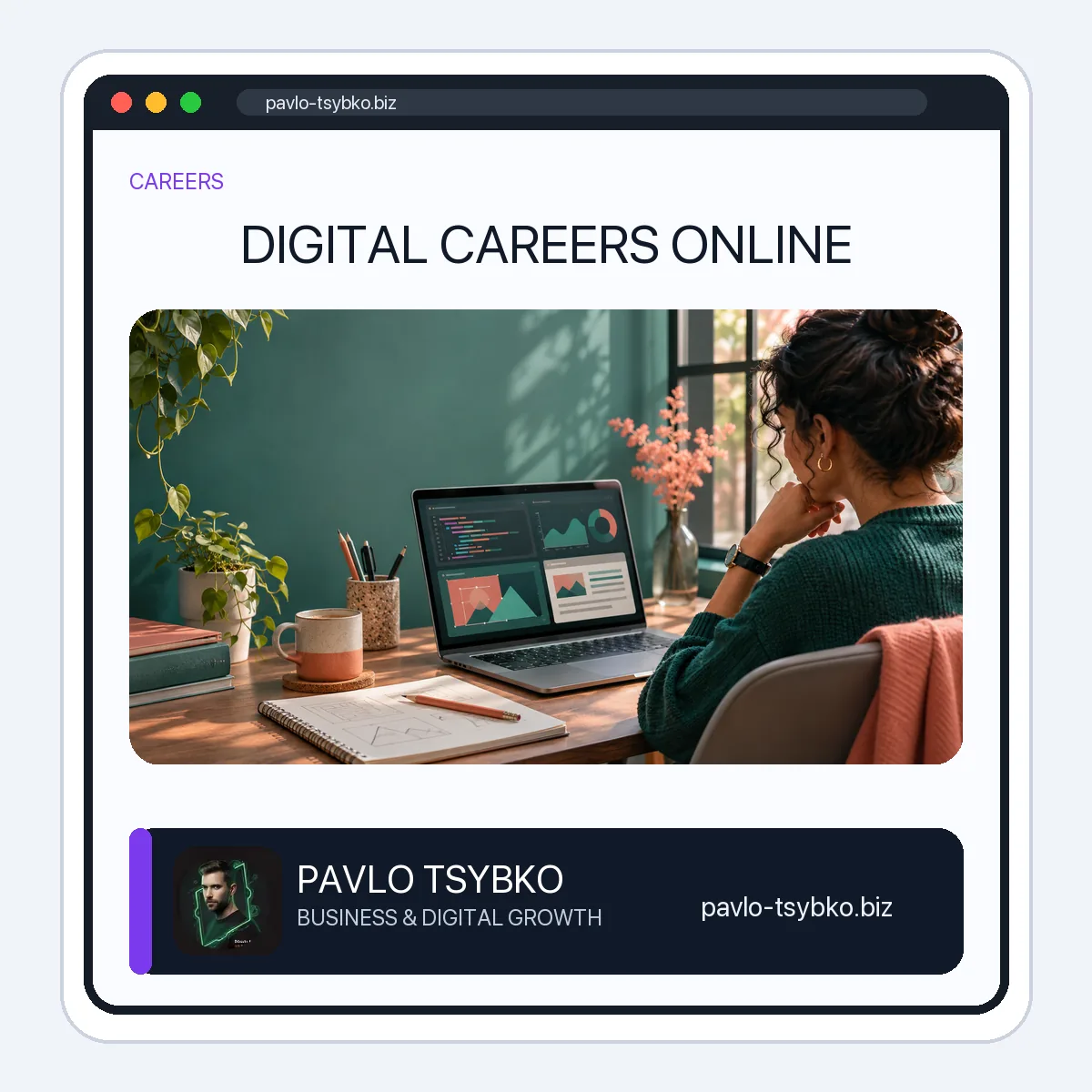
10 Digital Careers You Can Start Learning Online
Originally published 8 February 2023; substantially updated 5 November 2026.
You can begin exploring many digital careers online. That does not mean a short course qualifies you for every job, guarantees remote work or predicts your income. Entry requirements vary by employer, country and specialization. Use this guide to pick one direction, practise a small real-world task and check local job listings before paying for training.
Ten directions to explore
1. Digital marketer
Digital marketers connect an audience, an offer and measurable channels such as search, email and advertising. Start by drafting a one-page campaign brief for a real or hypothetical small business: audience, objective, message, channel, budget and one useful metric.
2. Web developer
Web developers build and maintain sites and web applications. Begin with HTML, CSS, accessibility and basic JavaScript, then publish a small responsive page and document what you tested. Employers may expect a portfolio, formal education or additional technical experience; compare local openings with the U.S. Bureau of Labor Statistics role profile.
3. Data analyst
Analysts clean data, answer defined questions and explain the limits of their findings. Practise with a public dataset: define a question, clean a spreadsheet, make one chart and write a short note about missing data. Data science roles can require substantially deeper statistics and programming than this first exercise.
4. Social media manager
This role plans content, coordinates publishing and community responses, and reports on useful business outcomes. Create a two-week content calendar for one audience and specify how you would handle questions or complaints. If you are starting from scratch, see this free SMM learning plan.
5. Content creator or editor
Creators and editors research, produce and improve articles, video, audio or other materials for a specific audience. Make three pieces on one topic in different formats; explain your sources, editorial choices and how you would assess whether they helped readers.
6. Graphic designer
Designers solve communication problems with layout, typography and visuals. Start with a brief, then create two alternative designs and explain their trade-offs. A portfolio matters, but some jobs also expect a degree or structured training; the BLS graphic-designer profile is one reference for U.S. requirements.
7. SEO specialist
SEO work includes understanding search intent, improving useful content and checking technical access to pages. Audit a small site: identify one reader question, review the matching page, check its title and links, and propose a measurable improvement. Avoid promises of specific rankings.
8. Cloud systems specialist
Cloud work can involve deploying, monitoring and securing services. Begin with computing, networking, permissions and cost basics in a controlled lab. A beginner exercise is to deploy a simple test application, document its access settings and remove the test resources afterward. Production responsibilities require stronger operational experience.
9. Project coordinator
Coordinators help teams track scope, owners, schedules, risks and decisions. Make a small project plan with milestones and a change log. Project-management specialist roles often have broader requirements; see the BLS occupation profile before treating an online course as a professional credential.
10. Cybersecurity analyst
Security analysts help protect systems and investigate risks. Learn networking, operating-system and security fundamentals in legal practice environments. Start with a simple threat model for a demo site, not tests on systems you do not own. Many analyst jobs require a degree and related experience, as the BLS profile explains.
How to choose your first path
- Pick a work style: building, analysing, creating, coordinating or protecting.
- Check real requirements: read at least five local entry-level job descriptions and note repeated skills, credentials and tools.
- Run a small project: complete one of the exercises above and ask for feedback.
- Choose training after the test: compare syllabus, practice, instructor feedback and total cost. A certificate alone is not proof of job readiness.
- Build evidence: keep a concise portfolio explaining the problem, your work and its limitations.
These are starting points, not a ranking by pay or a promise of employment. The linked U.S. occupational profiles describe duties and typical entry requirements in that market; verify requirements where you plan to work. If you are comparing marketing roles, the SMM manager training guide gives an example of skill-based practice.