Telegram for Business: Channels, Groups, Bots and Privacy
Originally published June 15, 2023. Substantially revised November 2026. This is a practical guide, not a documented client case study or a promise of business results.
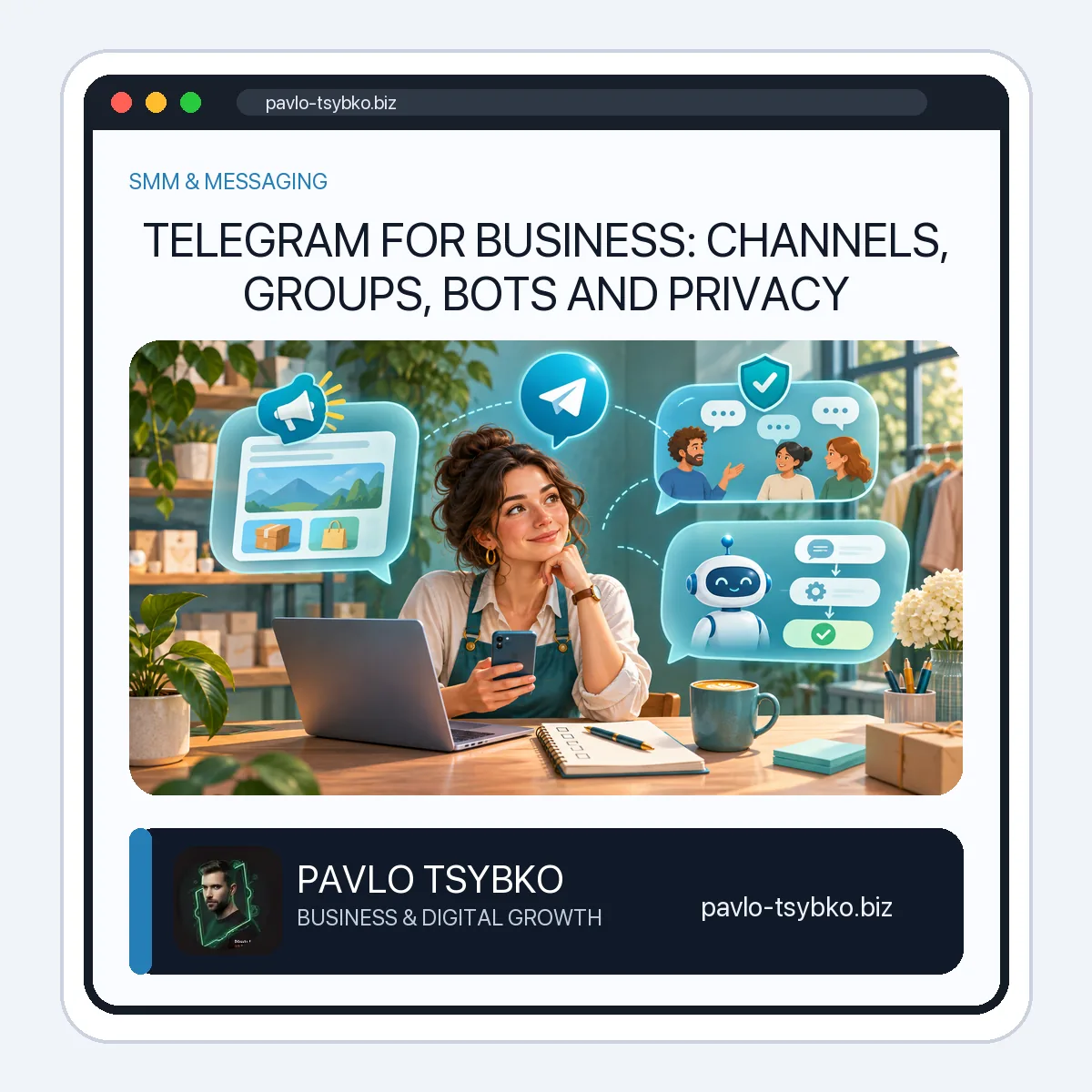
Telegram can give a business several different ways to communicate: a channel for announcements, a group for discussion, direct conversations for support, and bots for narrowly defined tasks. The useful starting question is not “How do we get the most subscribers?” It is “What job should this space do for customers, and who will maintain it?”
Choose the format before creating another account
- Channel: use it when you need to publish updates to an audience. Decide what people will learn, how often you can publish, and who can approve a post. Telegram describes channels as a broadcasting format; members can see the channel’s message history when they join. Telegram Channels FAQ
- Group: use it when customers or members genuinely need a place to ask and answer questions. Write participation rules, assign a moderator, and plan how to handle spam, complaints and requests for private support.
- Bot: consider one only when a repeatable task is clear, such as routing a question or providing a status update. Specify which messages it can receive, what it stores, when a human takes over, and how errors are handled. Bot permissions and privacy behaviour depend on its configuration. Telegram Bot Features
You may use more than one format, but each should have a separate purpose. A channel with no publishing plan, a group with no moderator or a bot with no human handoff can create more work than it saves.
Build a useful starting point
Write one sentence explaining whom the channel or group serves and what members can expect. Prepare a short description, a pinned welcome message and a few useful posts before inviting anyone. Give people a clear route to contact a person when the discussion involves an order, an account or sensitive information.
For a business, useful content often answers a question customers already ask: how to choose between two options, what information to prepare before requesting a quote, or how a service process works. Keep promotional posts accurate and distinguish them from advice. If you cannot maintain a regular schedule, promise less and publish consistently.
Invite people without spamming them
Share a join link in places where people already expect to hear from you: your website, an existing customer resource, a social profile, or an agreed partner placement. Explain what happens after joining. Do not scrape members from other groups, bulk-message strangers or buy followers to make the space look active. Telegram warns that unsolicited messages and channel invitations can lead to account restrictions. Telegram Spam FAQ
If paid promotion is appropriate, compare the official sponsored-message route with a clearly disclosed placement in another channel. Check the destination, audience fit, terms and delivery before paying. A small test is more informative than a promised subscriber number. Our paid Telegram promotion guide explains these options; the channel growth guide covers the non-paid foundation.
Be precise about privacy and bots
Do not describe every Telegram conversation as end-to-end encrypted. Telegram distinguishes ordinary cloud chats, which use server-client encryption, from Secret Chats, which add end-to-end encryption and are device-specific. Channels and groups are not a substitute for a private document or a secure customer-support process. Telegram FAQ: Security and Secret Chats
Before adding a bot, review who operates it and what data it can receive. Limit its access to the task it actually performs. Avoid asking people to send passwords, payment credentials or sensitive customer records in a public group or to an unverified bot. Test the bot with non-sensitive sample messages, including failures and requests it should hand to a person. For a first workflow, see our Telegram bot guide.
A four-week business pilot
- Week 1: choose one audience, one customer task and one format. Assign an owner and publish the description, welcome message and rules.
- Week 2: prepare a small set of helpful updates or discussion prompts. Invite only people who have a relevant reason to join.
- Week 3: observe actual questions, response time and moderation work. If appropriate, try one clearly labelled partner mention or a limited paid placement.
- Week 4: review which posts or conversations helped people, what the team could maintain, and whether the space led to a useful next action. Keep, revise or stop the pilot based on that evidence.
Track the work as well as the audience: who publishes, who answers, what needed escalation and what was learned. Subscriber totals alone do not show whether a channel helped a customer or a business.
When Telegram is not the right first step
Start elsewhere if customers cannot find a clear offer, inquiries are unanswered, the team has no time to moderate, or the business cannot explain why someone would join. Fixing those basics may be more useful than adding another channel. Our platform-selection guide can help compare Telegram with other options before committing to a new workflow.
Source note: Telegram features and rules can change. The linked official Telegram documentation should be checked before setting up an account, bot or ad campaign. This article does not describe a verified client result.