What Is SEO? A Small-Business Explanation
Updated 5 November 2026. This beginner’s explanation replaces the original 2016 article; search systems and interfaces continue to change.
Search engine optimization (SEO) is the work of making a website easier for people to find, understand and use through unpaid search results. It helps search engines discover and interpret your pages, but it does not buy a ranking or guarantee that a visitor will become a customer. For a small business, the useful question is not “How do I reach the top for every keyword?” It is “Can someone with a real need find a page that answers it and take the next step?”
How search works in plain language
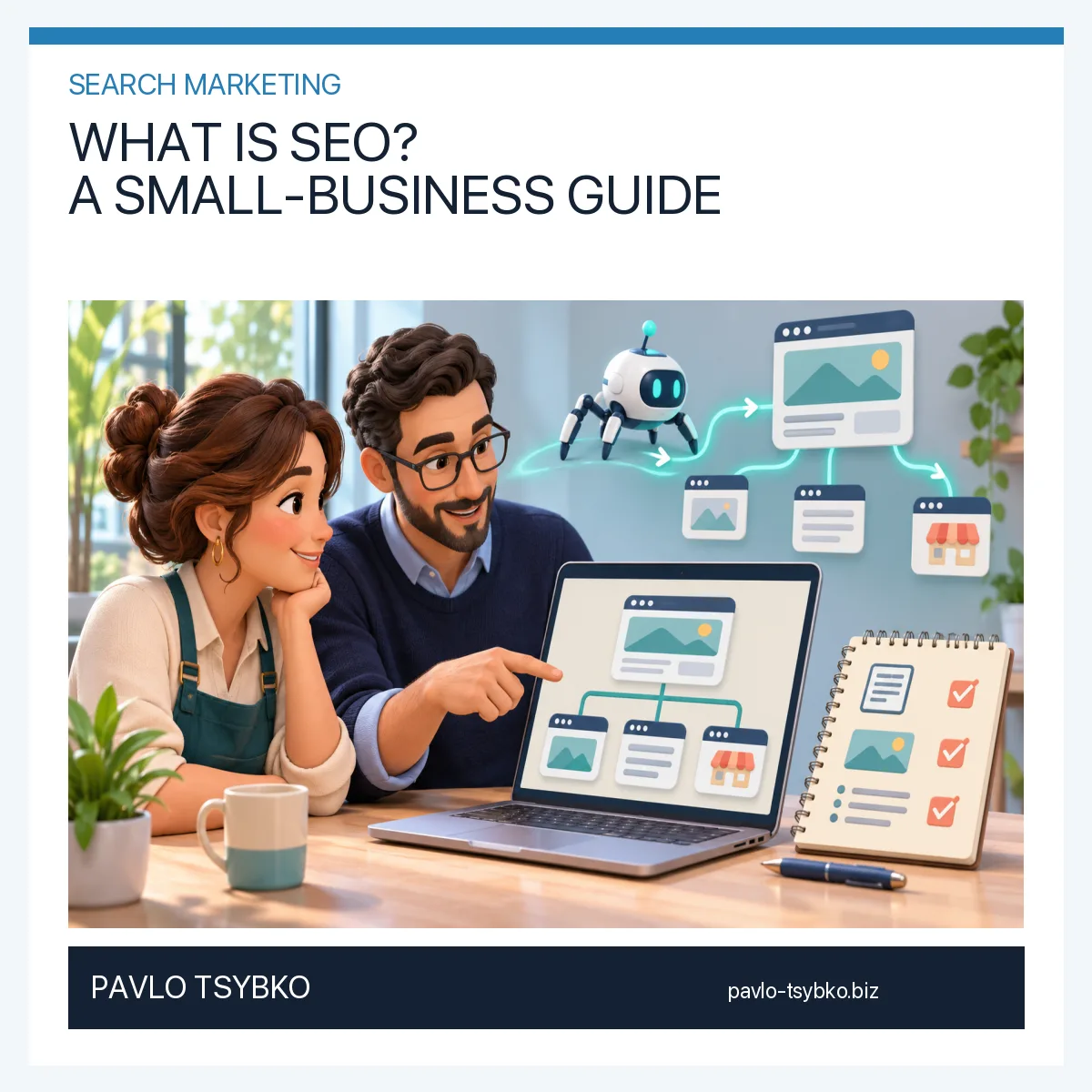
Search engines discover pages by following links and other signals, process pages they can access, and decide which results may be useful for a query. Discovery, indexing and ranking are different stages. A page can exist on your site without being indexed, and an indexed page can still be a poor match for a particular search. There is no reliable timetable or universal shortcut that forces a new page into a top position.
Google’s SEO Starter Guide describes SEO as helping search engines understand content and helping people decide whether to visit. That is a more useful starting point than counting purchased links.
What should a small business improve?
- Match the page to a real question. Give a service, product or problem its own useful explanation when that helps a visitor decide. Avoid making many nearly identical pages only to repeat a keyword.
- Make the site navigable. Important pages should be reachable through menus or contextual links. Give links descriptive text so people know where they lead.
- Write clear titles and content. State what the page offers, answer common questions and keep details current. A title is not a promise of a ranking.
- Check technical access. Verify that important pages load on mobile, are not blocked accidentally, and can be interpreted by search engines. Fix broken links and confusing duplicate URLs.
- Build real reputation. Earn relevant mentions through useful work, relationships and citations. Do not treat a large backlink count as a substitute for helpful pages.
- Measure the business outcome. Search Console can show search visibility and queries; your site analytics can show what visitors do next. Compare organic inquiries or purchases with your starting baseline, not with a promised rank.
Why buying links is not a simple SEO plan
The old version of this article recommended buying “permanent” or temporary links. That is not sound general advice. Google’s spam policies list buying or selling links for ranking purposes as link spam. Paid advertising and sponsorship can be legitimate, but the links need appropriate qualification, such as rel="sponsored" or rel="nofollow". For a practical alternative, use the off-page SEO checklist.
How long does SEO take, and what does it cost?
There is no honest fixed number of months, pages or links that fits every site. Google says changes can be reflected in hours or can take months. The work and cost depend on the site’s condition, competition, content needs, technical issues and available internal skills. Paying for SEO work does not purchase a place in organic results. Ask a prospective provider what they will audit, change and measure, and be cautious of guaranteed rankings.
A sensible first week
Choose one important product or service page. Check it on a phone, read its title as a new customer would, follow the contact or checkout path, and note unanswered questions. Verify that at least one other relevant page links to it. Then measure its starting search and business signals before making improvements. Our small-business DIY SEO checklist gives the next steps in order.
SEO is one way people may discover a website. If you are deciding what sort of site to build first, see Landing Page vs Multi-Page Website.