How to Train a Team to Run a YouTube Channel
Originally published February 8, 2023. Substantially updated November 2026. This is an educational planning guide, not an announcement of a separate YouTube Academy or a fixed-price course.
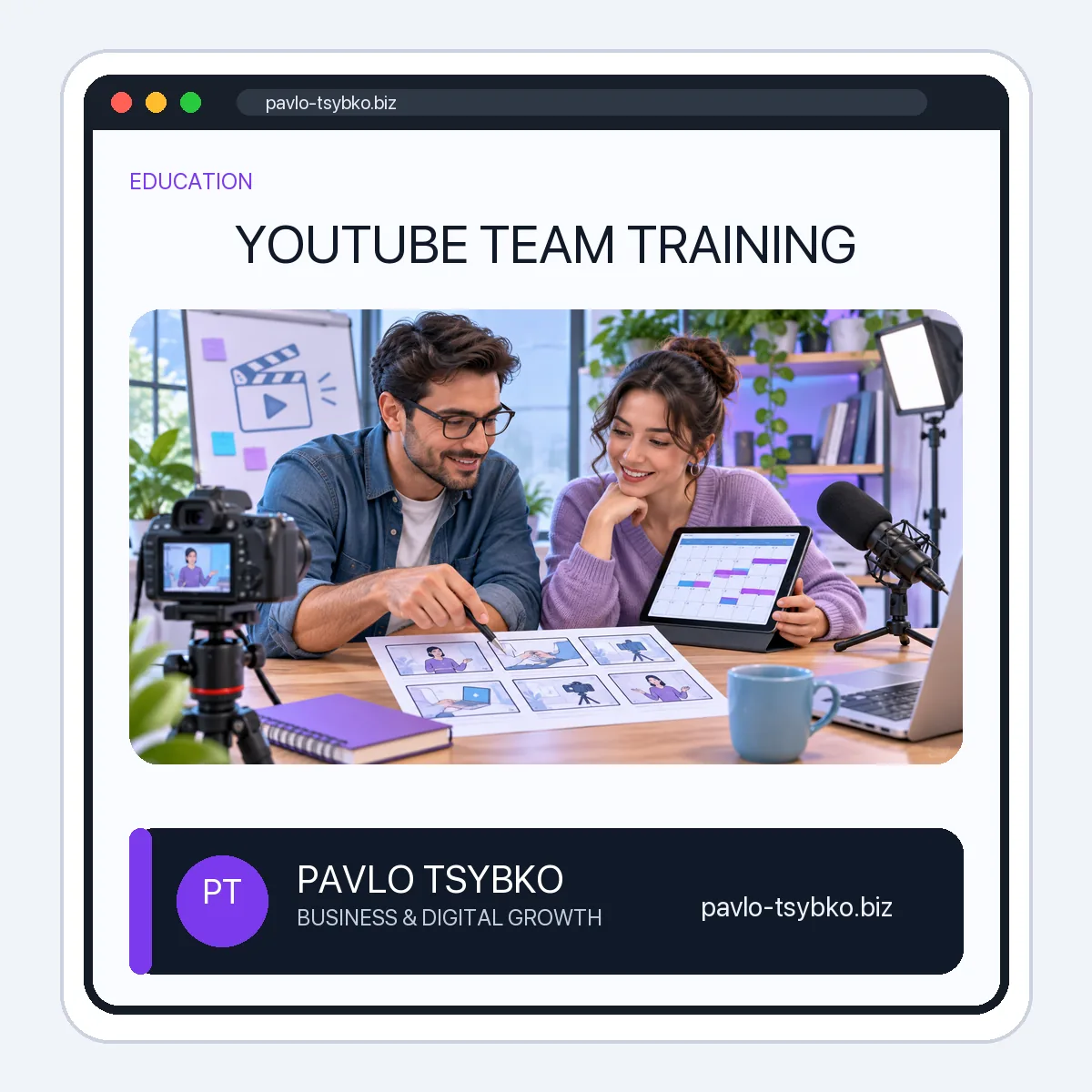
Teaching a team to run a YouTube channel is more useful than showing someone where the Upload button is. The work spans audience research, planning, production, publishing, access control and learning from real results. A small team can build those skills with a short, practical curriculum based on its own channel and responsibilities.
Start with a role map, not a course catalog
List the jobs that actually need doing: choosing topics, writing a brief, recording, editing, reviewing accuracy, designing a thumbnail, publishing, answering comments and analyzing performance. One person may cover several jobs. Identify the skills missing today and who will own the final decision for each video. This prevents a broad training program from becoming a collection of disconnected tips.
Write one realistic learning outcome per role. For example, a producer should be able to prepare a one-page video brief; an editor should know the intended viewer and key message; a channel manager should be able to publish accurately and review the first results. Avoid defining success as a guaranteed subscriber number.
A practical training sequence
- Audience and topics. Pick a specific viewer problem, gather questions from customers or your community, and group them into repeatable video series. Decide what the viewer should learn or do after each video.
- Brief and production. Create a short brief with the promise, outline, source material, visual needs and call to action. Practice a clear opening, understandable audio and accessible visuals before buying more equipment.
- Packaging and publishing. Write a title and thumbnail that accurately represent the video, check the description and links, choose the right playlist and review the mobile preview. One team member should own the final quality check.
- Distribution and community. Share a relevant video with an existing audience or partner when it helps them; respond to genuine questions. Do not use bought views, comments, subscribers or unsolicited mass promotion. YouTube’s fake engagement policy explains why artificial metrics are not a training shortcut.
- Measurement and iteration. In YouTube Studio, compare how viewers found the video, whether they watched and what they asked next. YouTube Analytics Help explains the Reach, Engagement and Audience views. Use one finding to improve the next video, not a universal benchmark.
Keep access safe while people learn
Do not train staff by sharing the owner’s Google password. YouTube Studio has channel permissions that let an owner invite people with roles appropriate to their work. Check who has access, assign the least access that still lets each person do the job, and remove access when responsibilities end. See YouTube’s current channel-permissions instructions and our plain-language permissions guide. Available controls may change, so verify them in your own account.
Use a small exercise to test the learning
Give the team one real topic and ask it to produce a brief, draft outline, title and thumbnail concept, publication checklist and a simple measurement plan. Review the work together. A useful exercise exposes unclear ownership and missing information before the team commits to an expensive production schedule.
After the first video, meet again to compare the plan with what happened. Did the title match the content? Which questions did viewers ask? Did the team collect enough information to make the next video better? Record decisions in a shared checklist so the process survives staff changes.
When outside coaching helps
Outside help can be useful when a team is stuck choosing priorities, coordinating roles or interpreting channel data. Agree in advance whether you need a focused review or a longer training series. Training scope, timing and price should be confirmed in a current proposal, not inferred from an old article or course advertisement.
For tailored remote coaching, see the current digital marketing team-training service. For the broader channel strategy, read YouTube for Business. Neither page promises a fixed number of views or sales.