Building a Remote Crypto Newsroom: A 2018 Reflection
Originally published September 10, 2018; updated November 11, 2026. This is a historical account of a media project as I described it at the time. It does not describe my current services, audience or results.
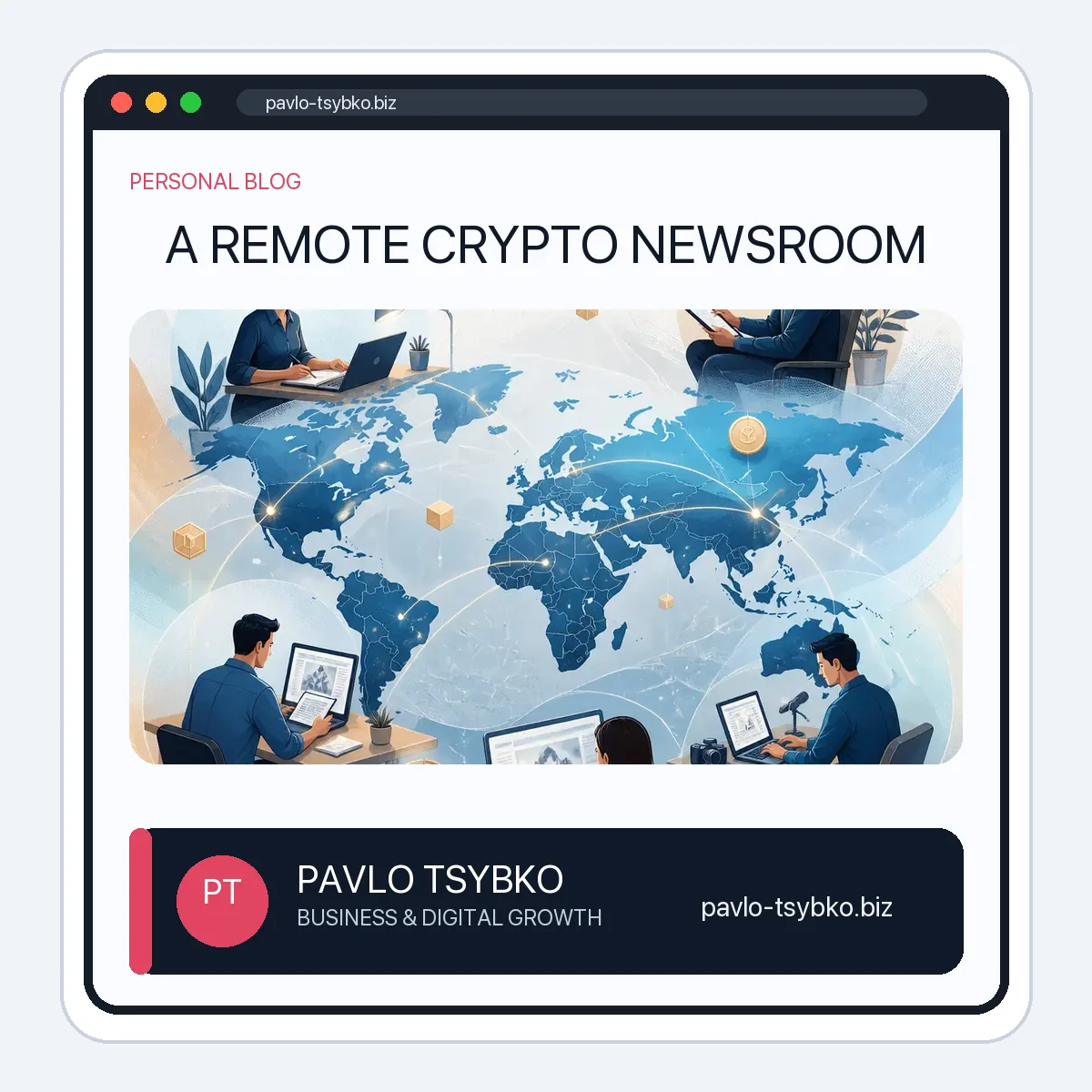
In 2018, I wrote about building a remote publication focused on cryptocurrency news. The original headline called it a “crypto empire”. That phrase captured my ambition then; it was not evidence that an empire existed. Looking back, the useful part of the story is how I thought about a distributed editorial project and what I still needed to learn.
Why I wanted to build a media project
I had been considering a news publication for some time. Earlier ideas were tied to individual countries. Cryptocurrency became the subject I wanted to explore because I was interested in the field and in meeting people who followed it. That interest shaped the project’s direction; it did not make the business or its coverage automatically successful.
Working remotely was also a deliberate choice. I had experience collaborating on projects without being tied to one office, and I wanted to see whether a publication could be coordinated in a similar way.
What my 2018 update reported
My original post described an early period of publishing news, making videos and building audiences across several platforms. It also described a team coordinating work through online chat and a shared spreadsheet. I shared traffic and follower counts and set further growth targets.
I no longer have archival analytics or reports that would let me verify those exact figures for readers today, so I am not republishing them here. Nor should the old targets be read as results achieved later. This page is a dated first-person account, not an independently audited case study or a forecast for anyone else’s media business.
The operational lesson
A distributed newsroom needs more than enthusiasm and a chat channel. Someone must own each story, check sources, review drafts, correct errors and keep track of what has actually been published. A shared tracker can help, but only if the people using it agree on responsibilities and deadlines.
Audience numbers can be useful, yet they do not tell the whole story. A publication also needs to understand where readers come from, what brings them back, how much the work costs and whether the editorial process is sustainable. Those questions matter more than an ambitious label in a headline.
Why this article remains online
I am keeping this note as a record of what I was trying to build in 2018 and how I described it then. It is not a current crypto-news feed, investment recommendation or offer of the old project. For the work and projects I describe today, see my current About page.