How to Build a Small-Business Marketing Strategy
Originally published February 2023. Substantially updated November 2026.
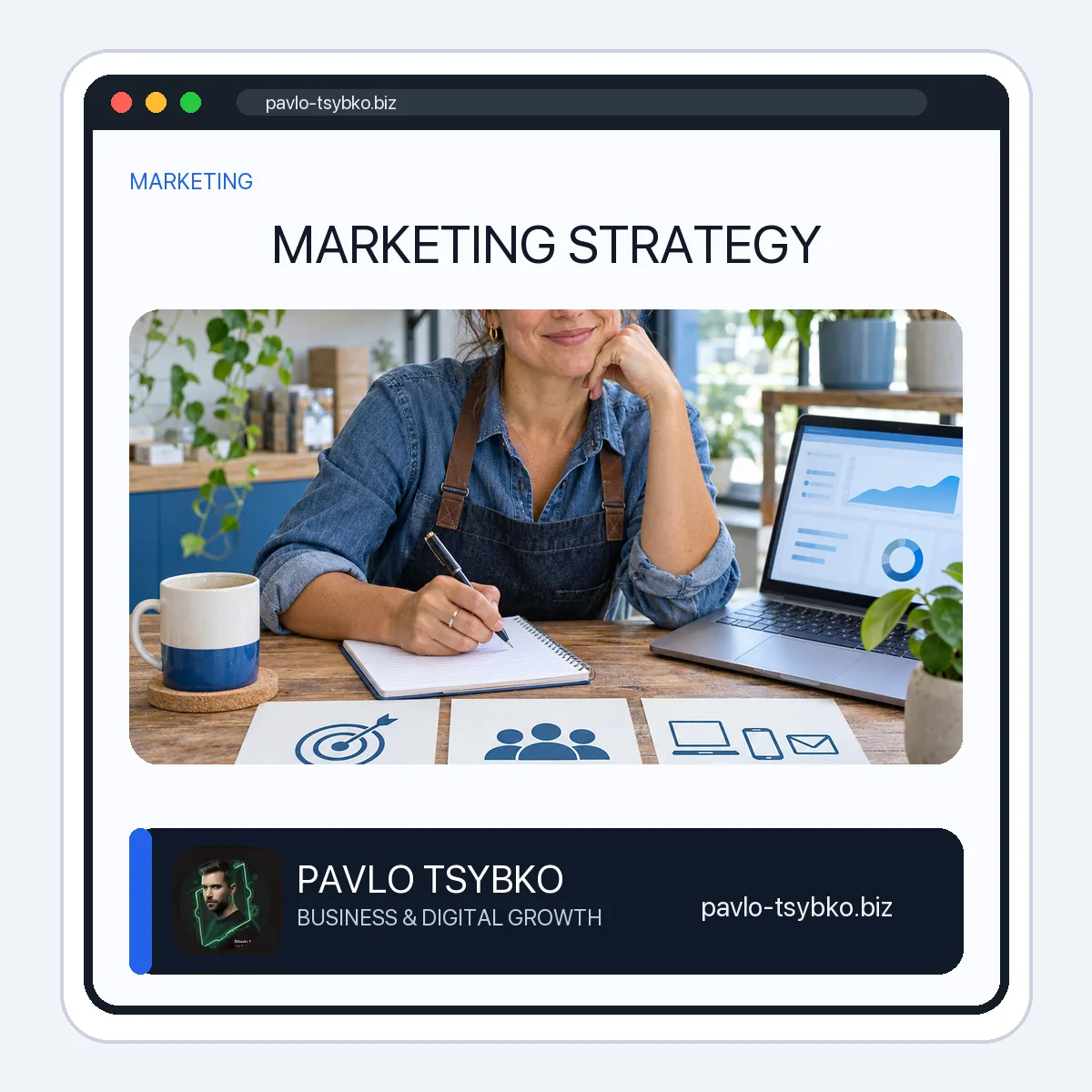
A marketing strategy is a set of choices about whom a business serves, what it offers, how people will discover it and what the team can realistically do. It is not a list of every available channel. This guide turns those choices into a small, testable plan for an online or service business. It does not promise a particular number of leads or sales.
Start with the customer decision
Describe one customer group and the problem that makes them look for help. Use actual inquiries, sales conversations, support questions or search terms where available. State what the customer needs to understand before making contact and what might stop them. A vague audience such as “everyone who uses social media” is too broad to guide a useful message.
Then write the offer in plain language: what the customer gets, who it is for, how the process works and what happens after an inquiry. If the landing page or contact path is confusing, adding traffic will not solve the core problem. Check it on a phone before investing in campaigns.
Choose a goal and a small set of measures
Pick one business action for the first test, such as a qualified inquiry, a booking request or a trial registration. Define “qualified” so the team does not count every message as a lead. Record a baseline and agree on a review period. Useful supporting measures might include relevant page visits, completed contact forms and response time; views and follower counts are context, not a substitute for customer actions.
The U.S. Small Business Administration’s marketing-plan guide recommends documenting the target market, competitive advantage, sales process, goals, actions and budget. Use that structure as a checklist, adapting it to your business and location rather than copying a template without evidence.
Pick channels by job and capacity
Search can help when customers already look for the problem you solve. Social channels can help when demonstration and conversation matter. Content can explain a considered purchase. Paid ads can test a defined offer while a budget is available. Email can maintain a relationship with people who chose to hear from you; do not buy or borrow a list and call it permission. These channels can reinforce one another, but each needs an owner and a clear destination.
Do not open five new channels at once. Compare expected customer intent, production effort, response capacity, cost and measurement before selecting one primary channel and perhaps one supporting channel. Our small-business channel comparison covers those trade-offs; this article focuses on how to turn the chosen mix into an operating plan.
Assign a budget, owner and stop rule
Separate media spend from production, tools and staff time. Decide who approves claims and creative, who publishes, who answers inquiries and who reviews results. If you run paid ads, set a test budget you can afford and a date or condition for pausing. A campaign without a working contact path or a response owner is not ready to scale.
Use a short action sheet for each channel: target question, message, format, destination, responsible person, cost and review date. For content-heavy work, the content marketing strategy guide explains research, production and distribution in more detail.
Run one experiment and learn from it
- Before launch: record the baseline, audience, offer, destination and the one change you intend to test.
- During the test: note spend and effort, publish consistently enough to learn, answer inquiries and document any material changes.
- At review: compare customer actions with the baseline and check lead quality, not only clicks. Small samples are clues, not proof that one tactic caused a sale.
- Next cycle: improve the weakest part of the path or stop the channel if the economics and team capacity do not support it.
If you add campaign parameters to links, use consistent source, medium and campaign names; Google Analytics’ URL-builder guidance explains those fields. Do not place customer names, email addresses or other personal information in the URL.
A practical strategy can fit on one page if the choices are explicit. Revisit it when the offer, audience or capacity changes. If you need help with a particular module—research, site, content or advertising—our modular online-channel support is scoped separately; it is not a promise of a full turnkey launch or guaranteed results.