How to Build Brand Awareness Online: A Practical Plan
Originally published February 2023. Substantially updated November 2026.
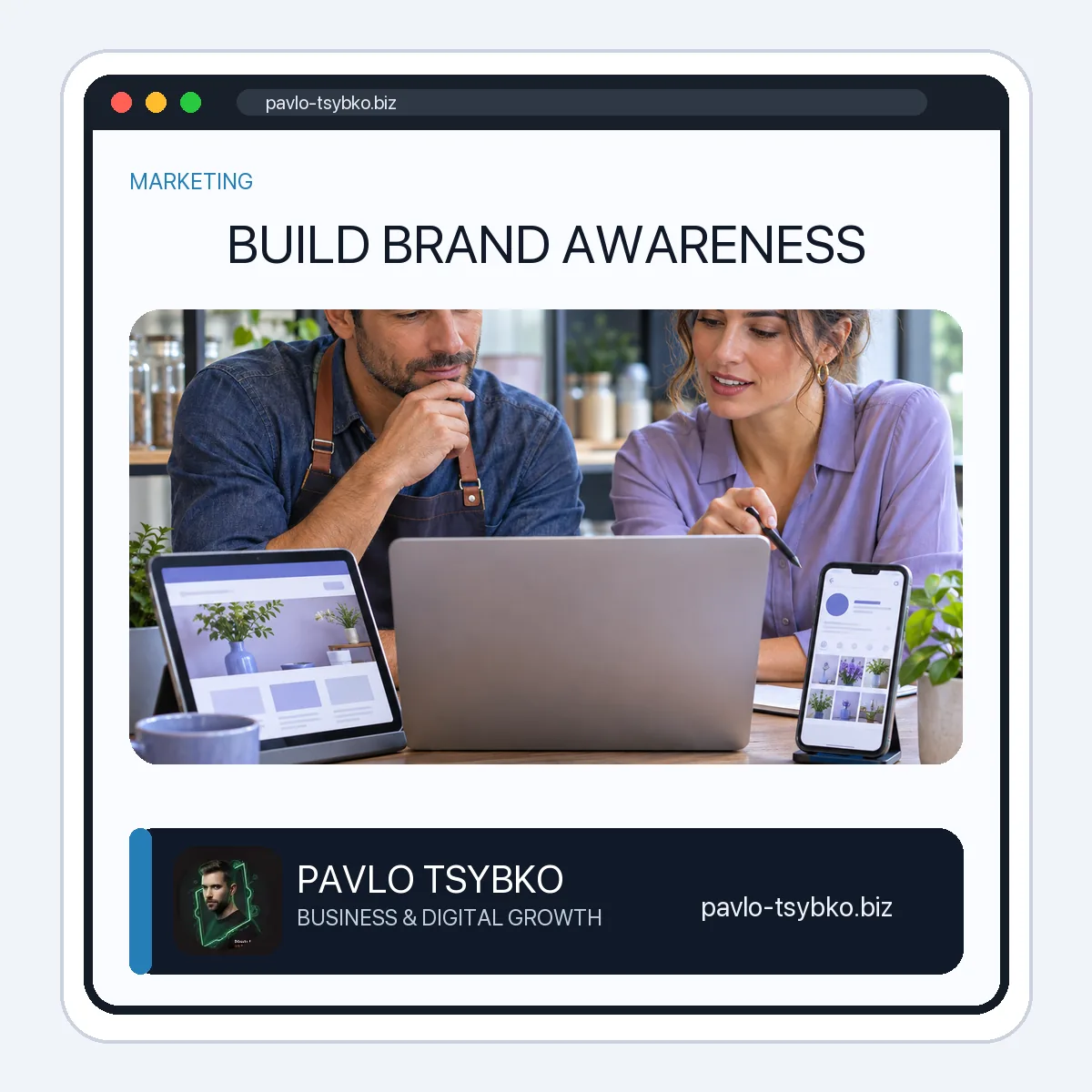
Brand awareness means that the right people can recognize and recall a business when its offer becomes relevant. It is not the same as a burst of impressions, a new logo or an unexplained follower increase. For a small business, the useful task is to make its identity and promise clear across the places customers actually encounter it, then watch whether the right audience begins to engage.
Define what people should remember
Write one sentence that names whom you help, the problem you solve and the aspect of your approach that is verifiable. A restaurant might emphasize a specific menu and service area; a consultant might explain a particular process and the situations it fits. Avoid a broad claim such as “the best solution for everyone.” Use the same core promise on your website, profiles, directory listings and first response to an inquiry.
Consistency does not mean posting identical text everywhere. It means the business name, offer, visual cues and contact path are recognizable and accurate. Check the experience on a phone: can someone identify the business, understand what it does and find a next step without guessing?
Choose a few places where recognition matters
Begin with owned surfaces: an understandable website or service page, a complete profile on the primary social channel and any relevant local listing. Then choose distribution according to the customer’s journey. Useful options include search-friendly answers to real questions, social posts that demonstrate the work, permission-based email for existing subscribers, partner mentions or a small paid test. Do not treat a large audience as automatically relevant.
For a service brand, content can explain how the work is done, address objections and show examples that you have permission to publish. A partnership can introduce the business to an aligned audience when the relationship is genuine and any paid promotion is disclosed. Paid ads can extend a message while funded; they are not evidence that customers remember or trust it. Our channel comparison helps weigh the trade-offs before spending.
Build a repeatable message system
Collect the questions customers ask before choosing a provider. Group them into a few message themes: the problem, the process, proof or limitations, and the next step. Assign an owner to each claim and verify examples before publication. If several people create content, keep a short guide to terminology, images, tone and approval. One accurate explanation reused in a video, article and sales conversation can be more valuable than a daily stream of disconnected posts.
Our social-brand content plan covers the narrower publishing workflow. This guide addresses brand recognition across the website, search, social and partner touchpoints.
Measure awareness without mistaking it for sales
Before a campaign, record a baseline for a defined audience and period. Depending on the channel, signals may include branded searches, direct or returning visits, relevant profile visits, mentions, qualitative inquiry notes or an appropriately designed recognition survey. Each has limits: direct traffic can be misclassified, a search trend can have many causes, and one customer saying they saw a post is not a controlled experiment. Reach and impressions show distribution, not recall or revenue.
Pair awareness signals with later actions, such as relevant inquiries, but keep the stages separate. Note what else changed during the test—seasonality, PR, an offer, a new location or a paid campaign. Review whether the people who noticed the brand match the target audience. If not, adjust the message or channel rather than celebrating a larger but irrelevant number.
A modest first-month plan
- Week 1: define the audience and one memorable, evidence-based promise; audit the website and primary profile for consistency.
- Week 2: prepare a small set of answers to real customer questions and a clear next step for interested visitors.
- Week 3: distribute those answers on one primary channel and one suitable supporting channel or partner; document effort and spend.
- Week 4: review audience fit, awareness signals and inquiries separately; note what to retain or improve.
This is a planning cycle, not a promise that awareness will be built in four weeks. If the offer or contact path is unclear, fix that first. If you need a broader plan connecting awareness to acquisition, use the small-business marketing strategy guide.